Nélida Nassar 8.27.2026
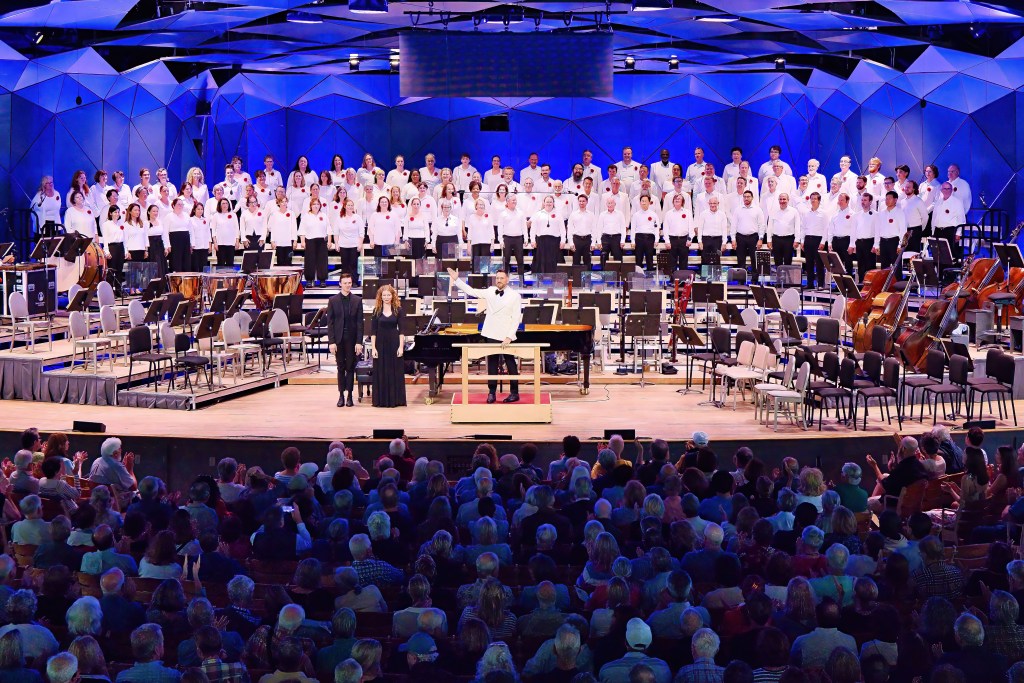
True to tradition, the Boston Symphony Orchestra’s closing concert of the 2026 Tanglewood season presented one of the most celebrated and influential symphonies of all time: Ludwig van Beethoven’s (1770–1827) Symphony No. 9 in D minor, Op. 125, often simply referred to as Beethoven’s Ninth. It was also an opportunity to bring the orchestra together with established soloists and the Tanglewood Festival Chorus, who combined to striking effect.
The Ninth Symphony was the result of a long period of gestation spanning more than thirty years. As early as 1792, Beethoven was already working on the concept of a symphony with a choral component. This would eventually culminate in his last symphony and its celebrated finale featuring a choir, thereby shattering the genre’s traditional model. The finale’s “Ode to Joy,” set to a text by Friedrich von Schiller (1759–1805), calls for brotherhood among peoples — a magnificent testament from a composer who was by then completely deaf and would pass away three years later. Beethoven had believed in the promises of the French Revolution and the Enlightenment before becoming a symbol of Germany, and subsequently of Europe.
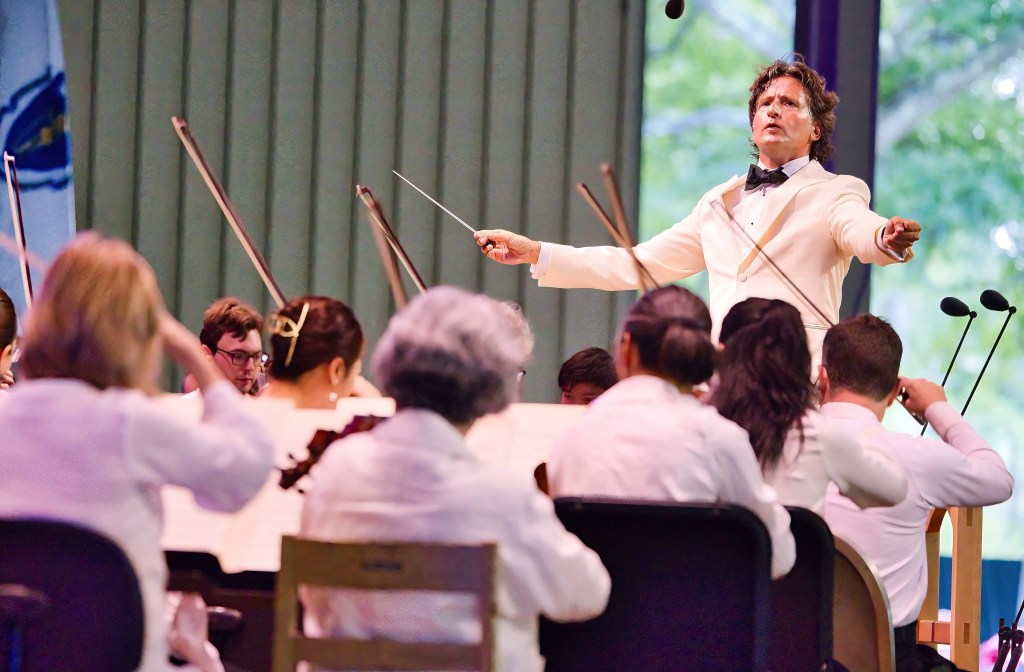
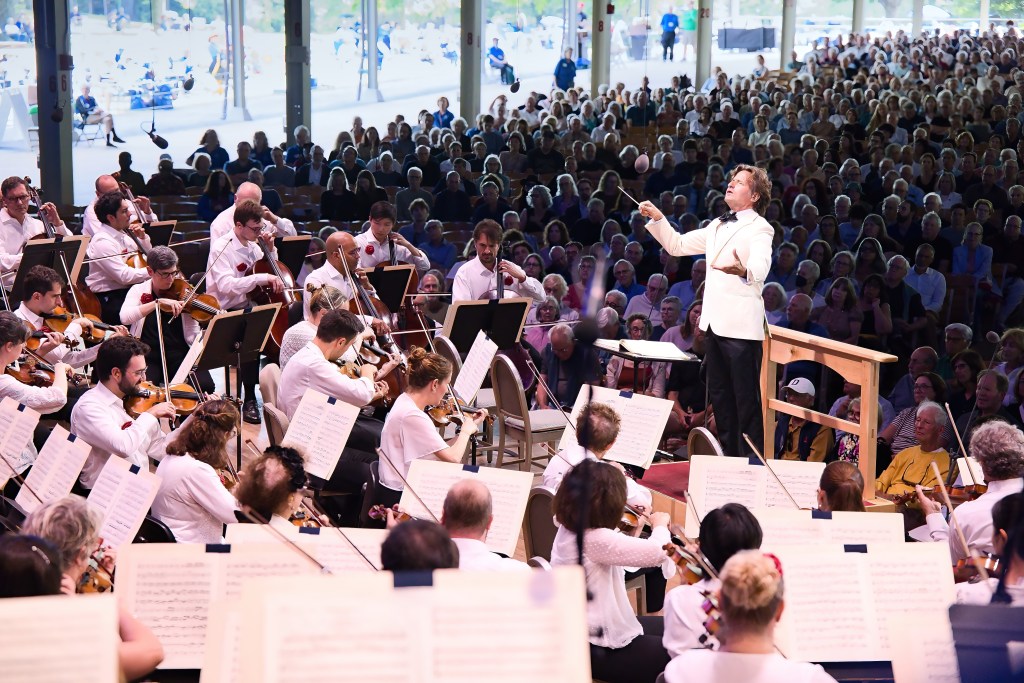
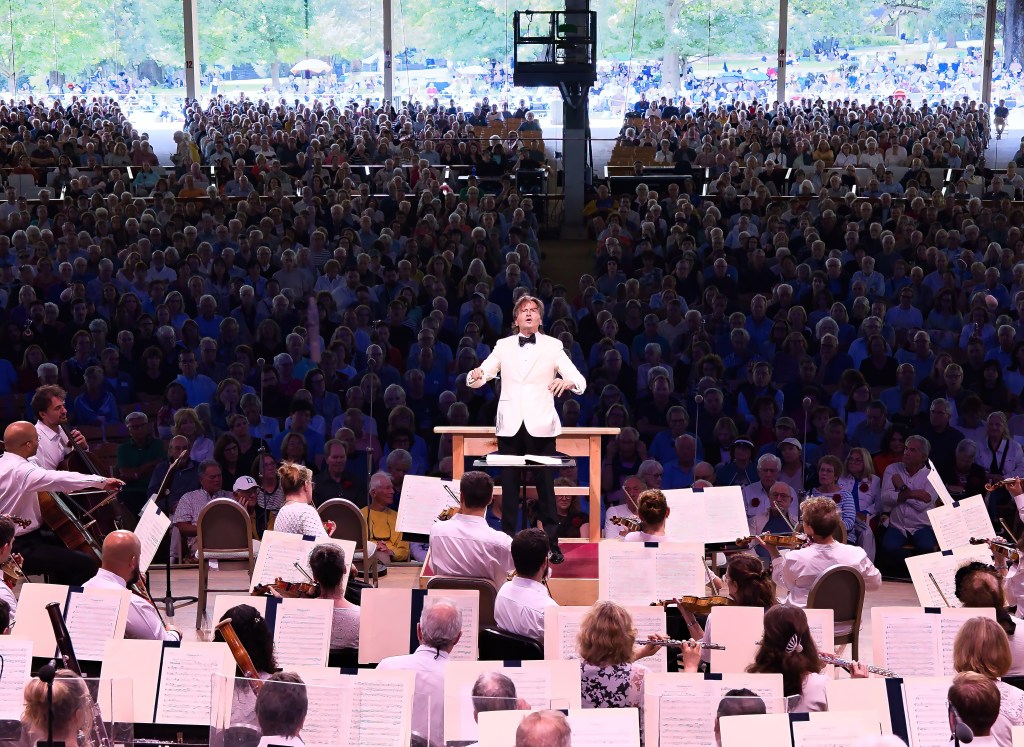
Spanish conductor Gustavo Gimeno boldly confronted the initial chaos of the first movement, marked Allegro ma non troppo, un poco maestoso; here is chaos then order springing from the earth! He continued with explosive rhythmic energy, prominent timpani solos, and a playful fugato in the jaunty and ironic second movement, before turning to the solemn and meditative third. Finally, he brilliantly shaped the highlight, the symphony within the symphony: the choral finale, a blend of many forms and styles — fanfare, elegy, oratorio, double fugue, theme and variations. It all culminated in a frenetic, prestissimo surge. “Joy, beautiful spark of the gods!” “You have no idea what it is like for one of us always to hear such a giant as Beethoven marching behind him,” Johannes Brahms remarked to conductor Hermann Levi. Like the great French revolutionaries, Beethoven was convinced he was working for posterity. When musicians struggled with the difficulties of his music, Beethoven remained characteristically defiant. Responding to criticism of his Op. 59 quartets, he is said to have remarked: “Oh, they are not for you, but for a later age!”
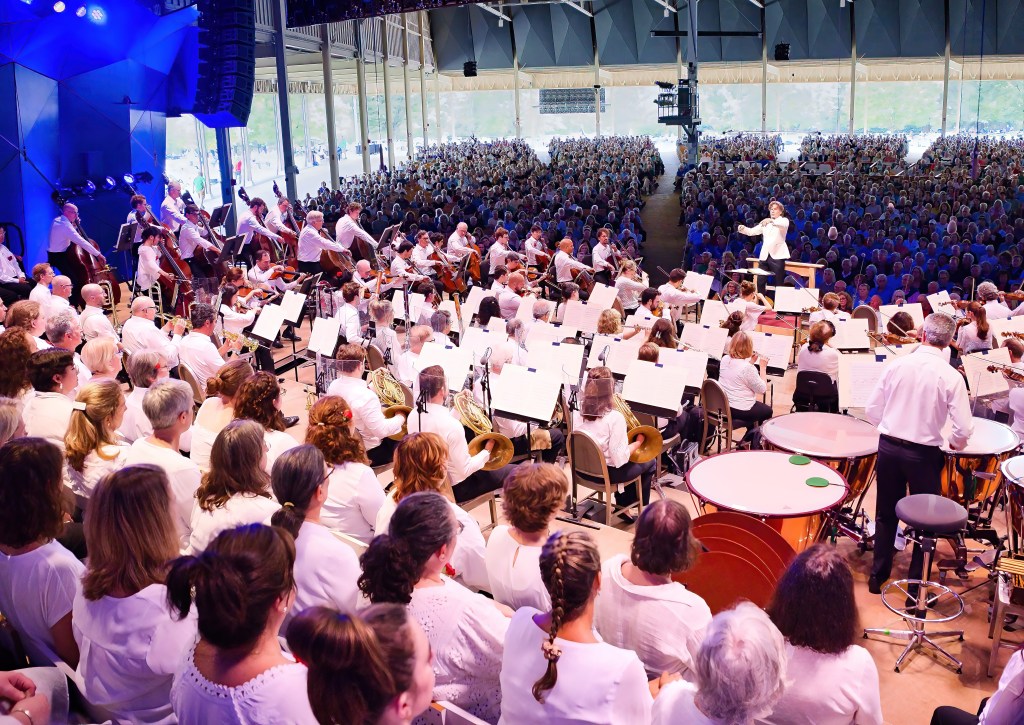
In the string and brass sections — with the horn players notably distinguishing themselves — as well as among the woodwinds and percussion, the score was performed with impressive precision and synchronization between sections. True, a lack of emphasis in the handling of dynamics was noticeable on a few occasions, particularly in the most expressive passages (such as those in the Scherzo), and some fortissimi lacked sufficient impact — especially in the strings, where the bowing could have been more forceful during the score’s most “heroic” and potentially exhilarating moments. Overall, though, the orchestra effortlessly sustained the work’s intensity, building in power as the movements unfolded.
For the finale, the orchestra was joined by the Tanglewood Festival Chorus. Led by the energetic guest choral conductor Jean-Sébastien Vallée, it offered an ensemble that blended talented professional soloists and an all-volunteer chorus. The vocal component of the fourth movement was performed by approximately 200 singers; they achieved true unity of expression, characterized by a predominance of clear, consistent female voices that combined effectively with the warm male voices. The blending of vocal ranges was perfect and the crescendos were ideally executed.
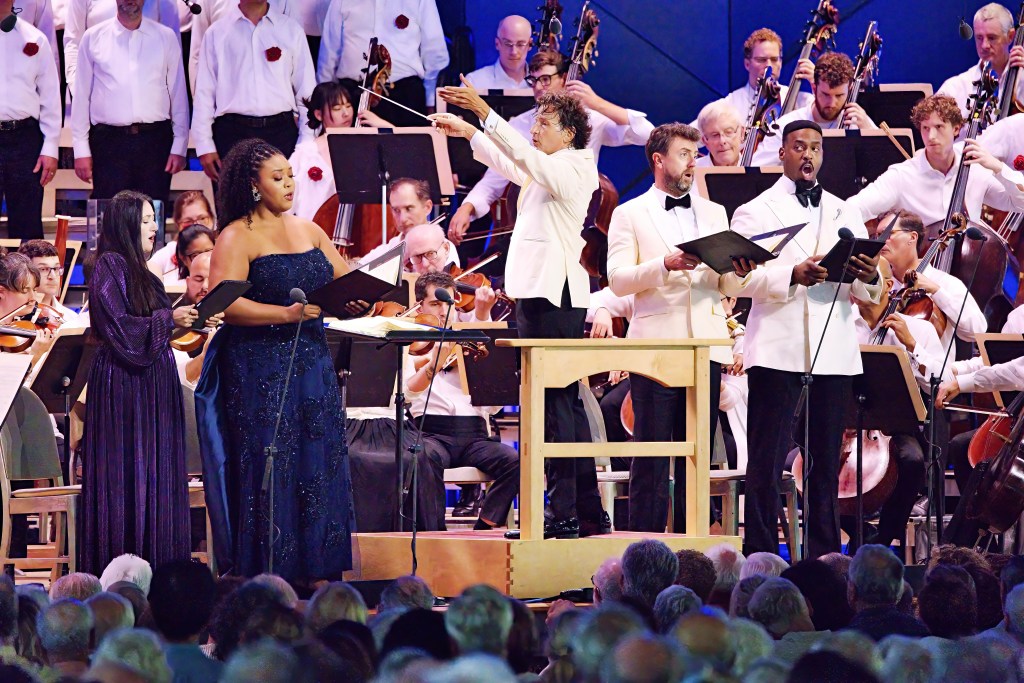
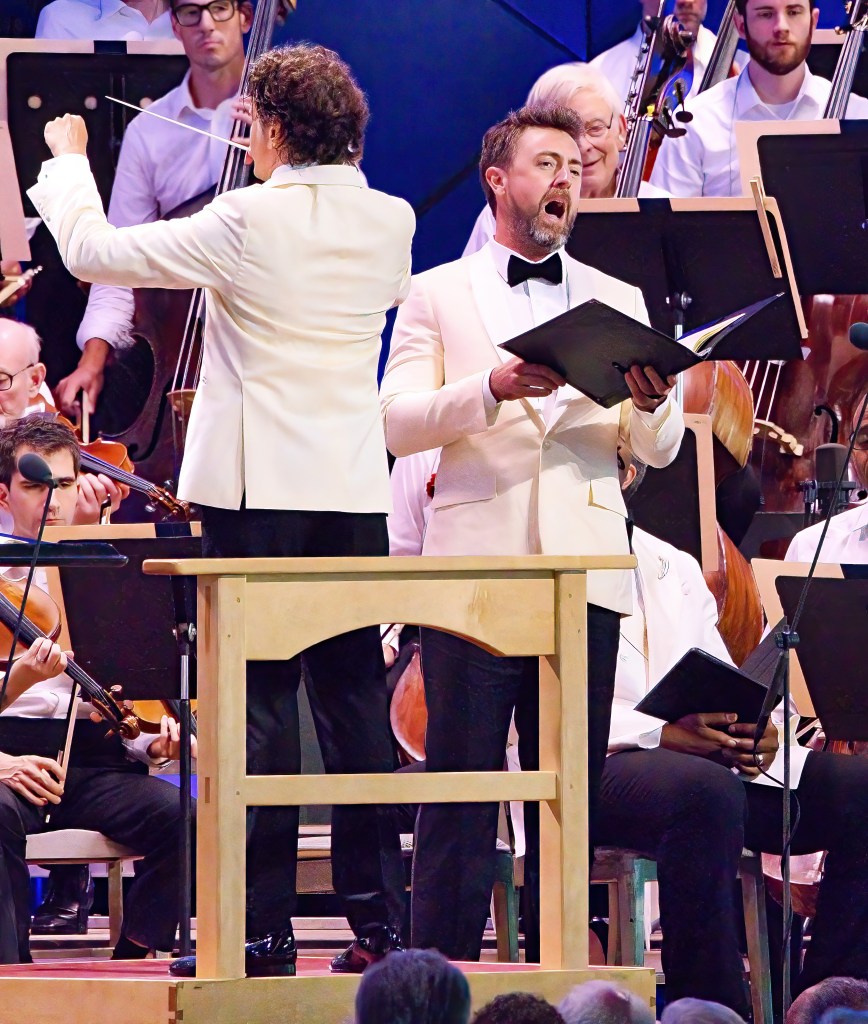
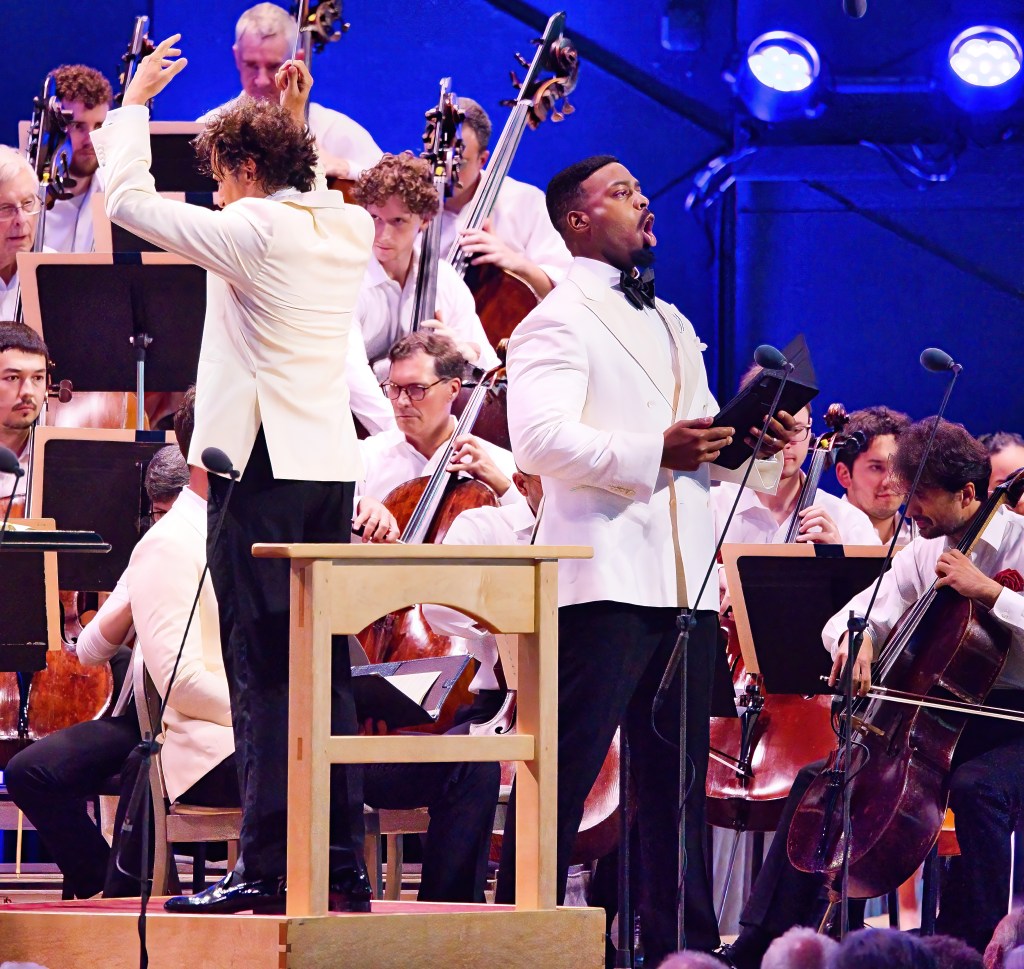
Positioned in front of the orchestra, the soloists demonstrated the vocal prowess for which they are renowned. Soloman Howard, in his Tanglewood and BSO debut, was the first to sing in the eagerly awaited “Ode to Joy.” Employing a fervent, powerful timbre fully resonant in the lower register, he delivered a compelling interpretation of Schiller’s text. Tenor Ben Bliss displayed his known brilliance in the upper register and maintained a bright clarity throughout the entire choral finale. He cut through the orchestral sound without needing to overstrain his instrument.
The two female soloists — Armenian soprano Mané Galoyan and American mezzo-soprano Zoie Reams — coexisted harmoniously, neither ever overshadowing the other, sharing a commitment to vocal generosity and articulate phrasing. Both soloists were making their Tanglewood and BSO debuts. Mané Galoyan’s soprano voice stood out in particular for its clarity and sensitivity, revealing a pleasing sense of expressive flexibility and a keen attention to nuance. As for American mezzo-soprano Zoie Reams, her brief appearances revealed a timbre that, while exceptionally powerful in projection, was nonetheless warm and clear across a wide range, accompanied by a delightful sense of musicality.
For all its innovations, the Ninth operates for the most part according to conventions familiar to audiences of its time, which helps explain why it was immediately embraced by them. The Beethoven myth took shape when Richard Wagner — himself driven by revolutionary ideals — hailed the work as the “human gospel of the art of the future.”
Amid thunderous applause, the four soloists were called back to the stage by the Tanglewood audience, which had been completely won over by the concert. The orchestra’s performance also received a well-deserved ovation after seventy minutes of particularly intense music. While the Ninth is less a political symphony than a symphony of joy, it is undeniable that the political realm — recalling the current political entanglements the Boston Symphony Orchestra’s music director and musicians have with the management — has appropriated the work for its own ends, turning the Ninth into the object of multiple, imaginary identifications. In any case, the audience can now look forward to the return of the orchestra and its music director Andris Nelsons to Boston for a season that promises to be equally intense and compelling.
Credits
Boston Symphony Orchestra
Tanglewood Festival Chorus
Guest Conductor: Gustavo Gimeno
Guest Choral Conductor: Jean-Sébastien Vallée
Soloists
Soprano: Mané Galoyan
Mezzo-soprano: Zoie Reams
Tenor: Ben Bliss
Bass: Soloman Howard
Photographer: Hilary Scott
 ART & CULTURE TODAY