Nélida Nassar 08.19.2021
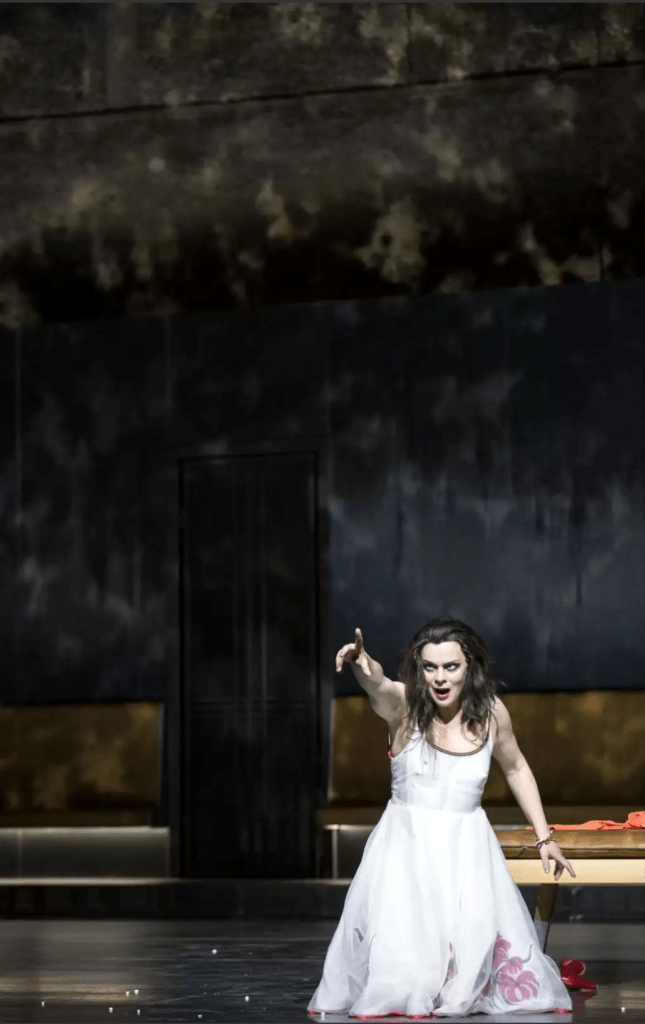
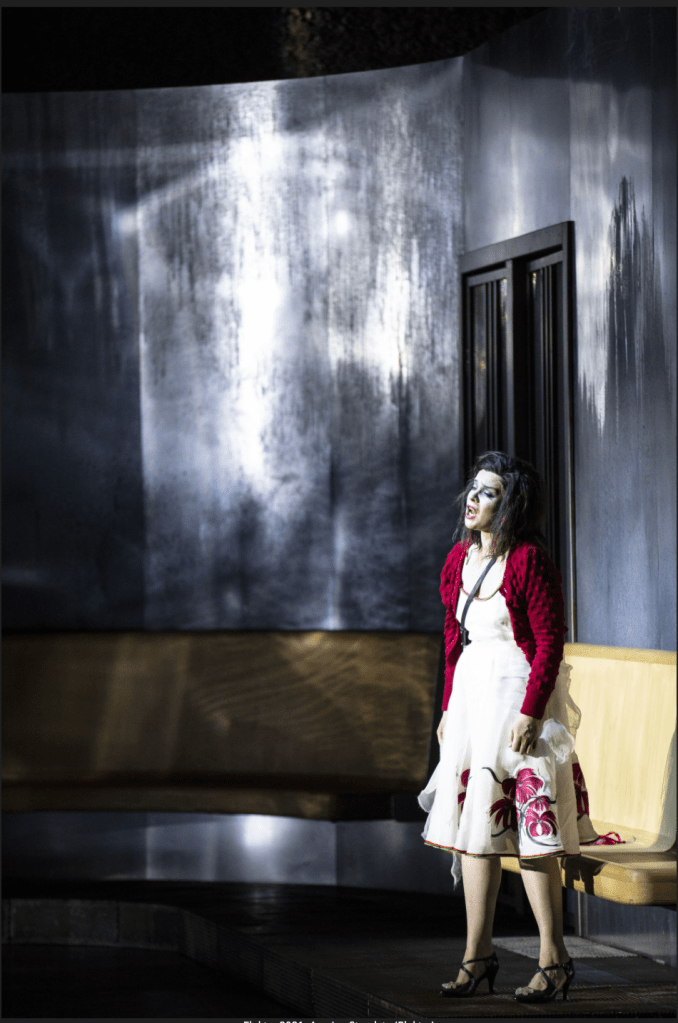
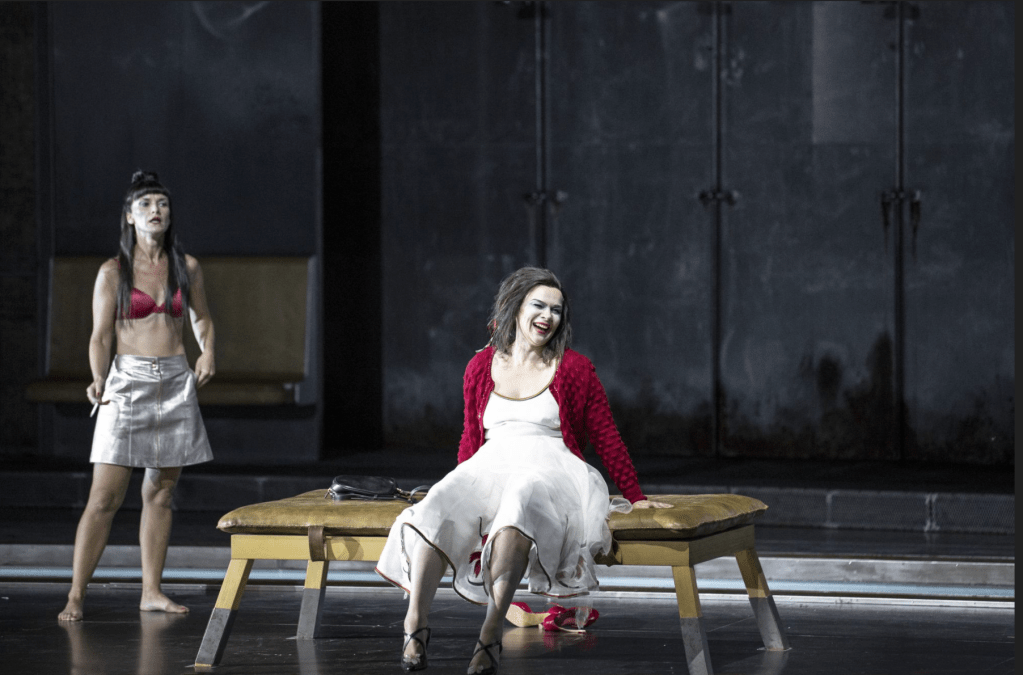
We can no longer count the concerts canceled since March 2020, swept away in the wake of the pandemic. The centennial anniversary festivities of the Salzburg Festival, scheduled for the summer of 2020, did take place, but in a much reduced form. To compensate, the 2021 Festival offered a ‘special’ centennial, held with panache and celebrated not only by the audience in Salzburg itself but also by viewers and listeners throughout the world – on several TV channels and on online platforms as well as in cinemas. In view of its resounding success at its premier in the 2020 festival, Richard Strauss’s Elektra was repeated this season. And no wonder. Masterfully directed by Krzysztof Warlikowski, the production has extraordinary dramatic power, and once again it received the first-rate musical performance it merits.
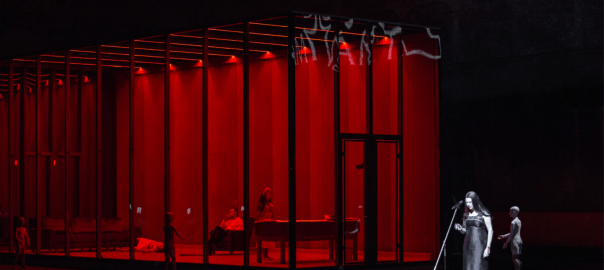
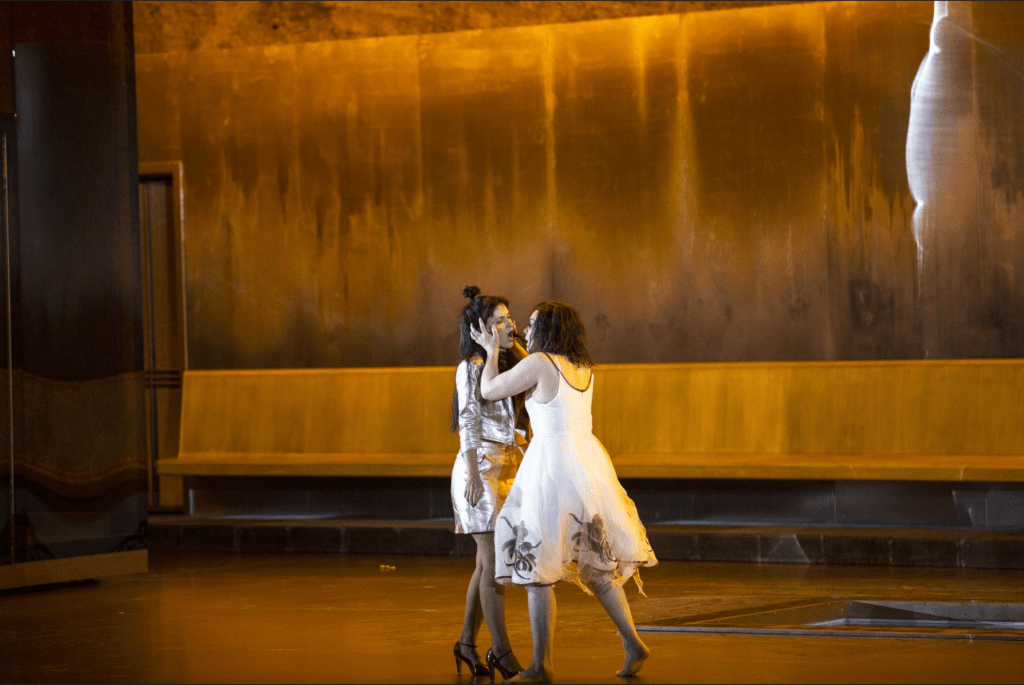
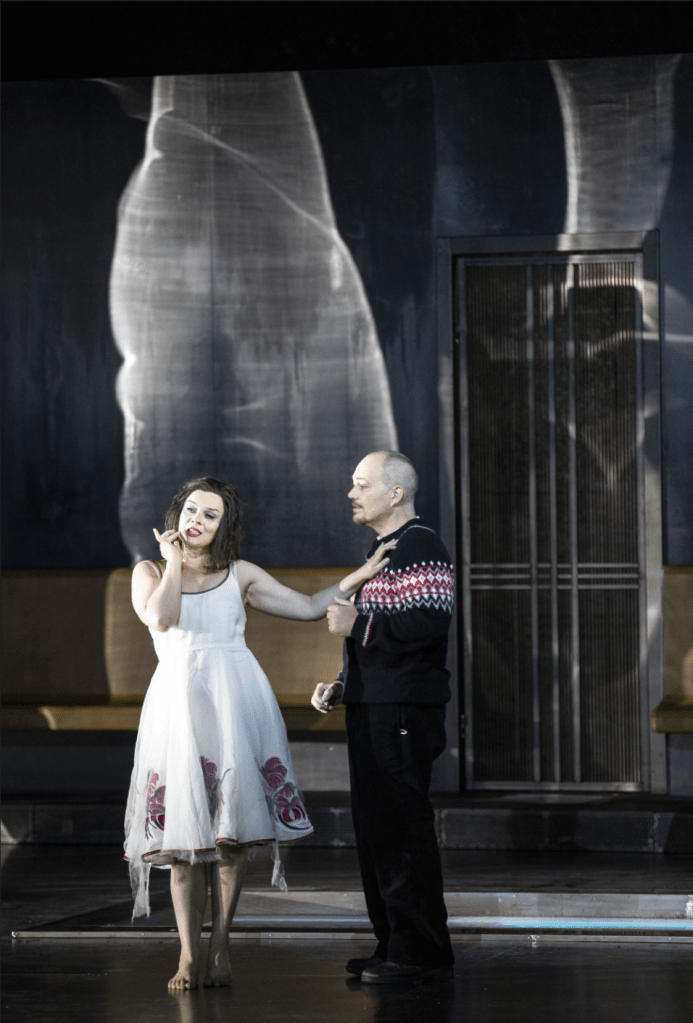
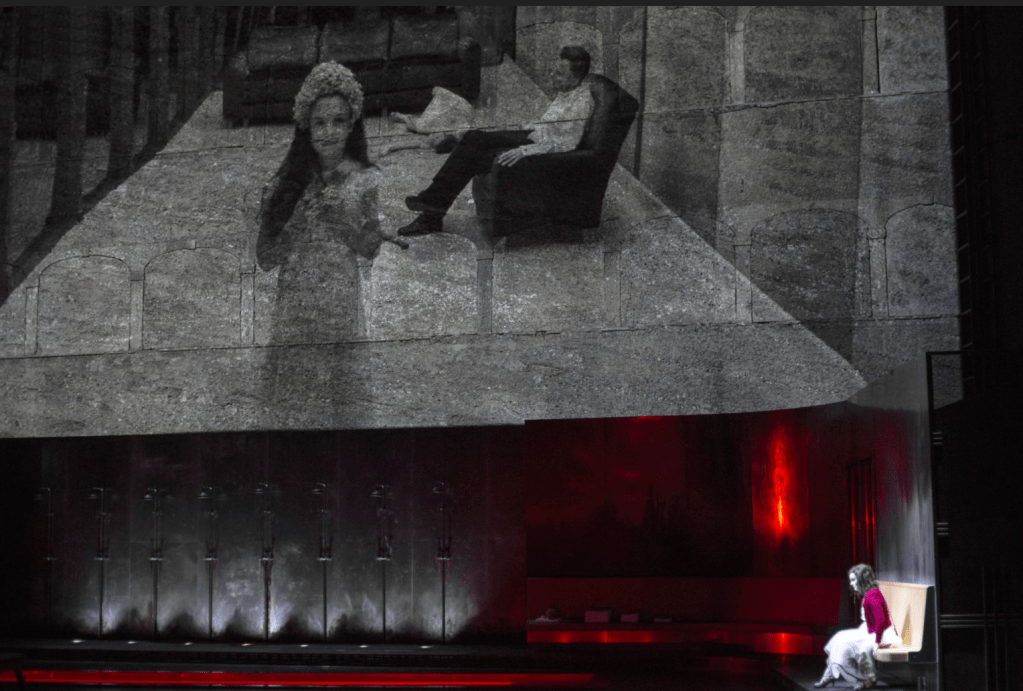
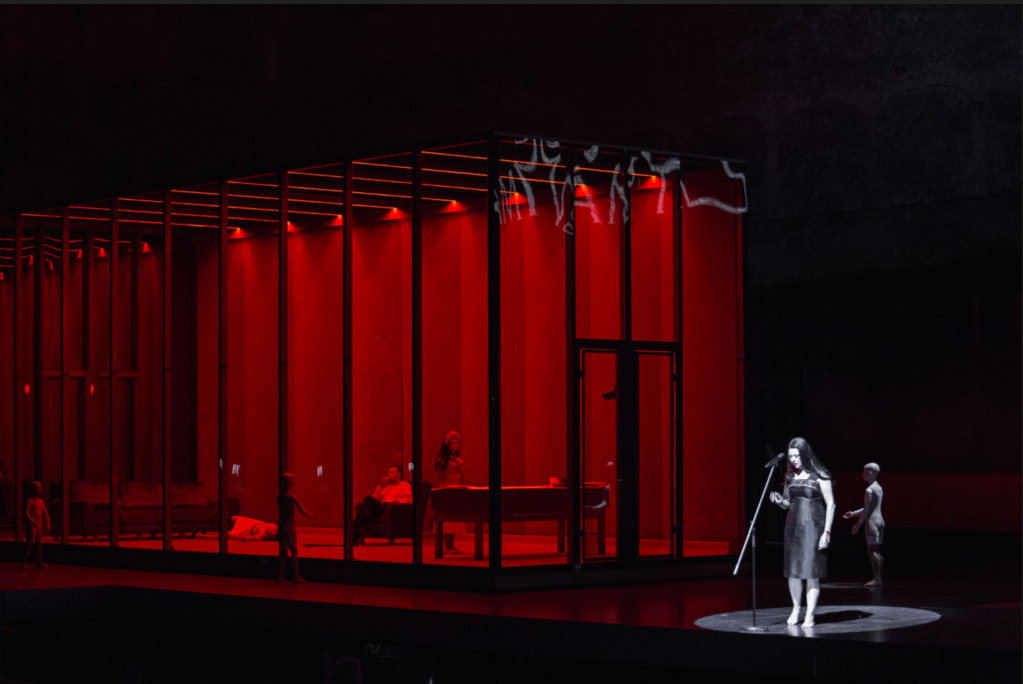
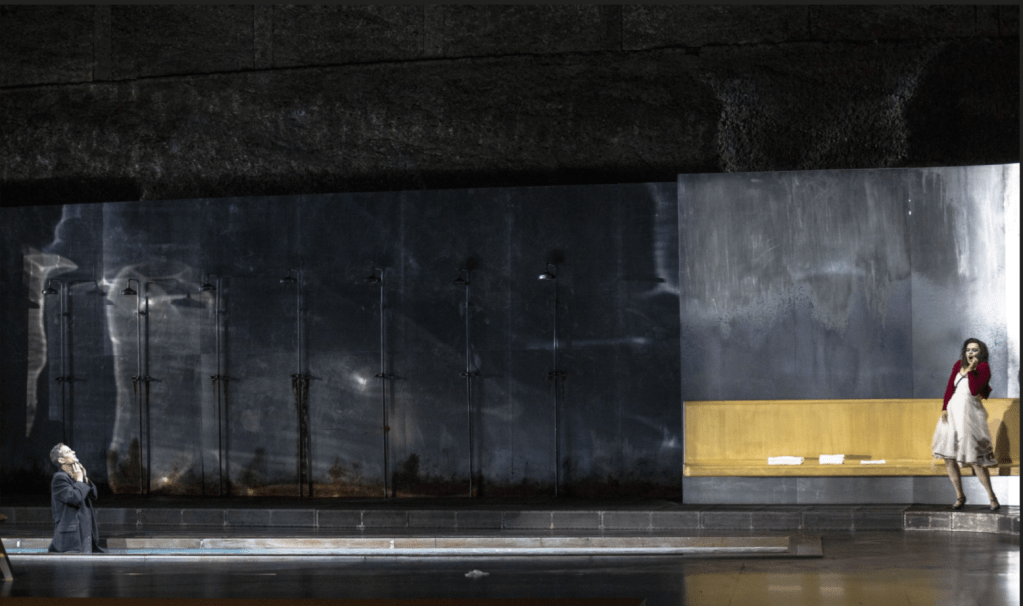
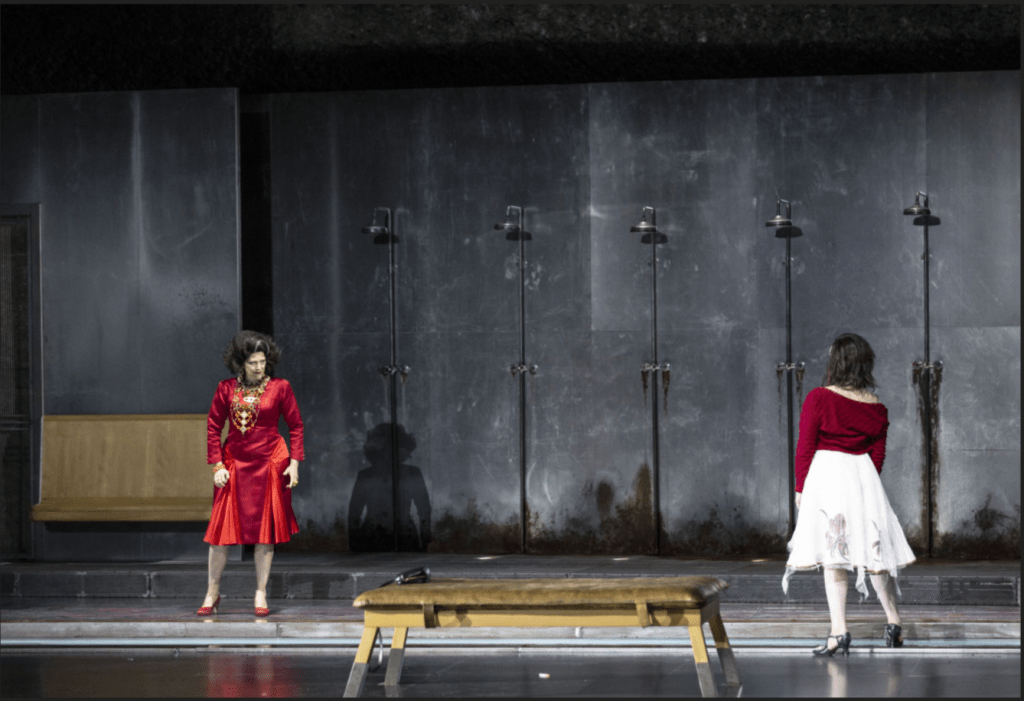
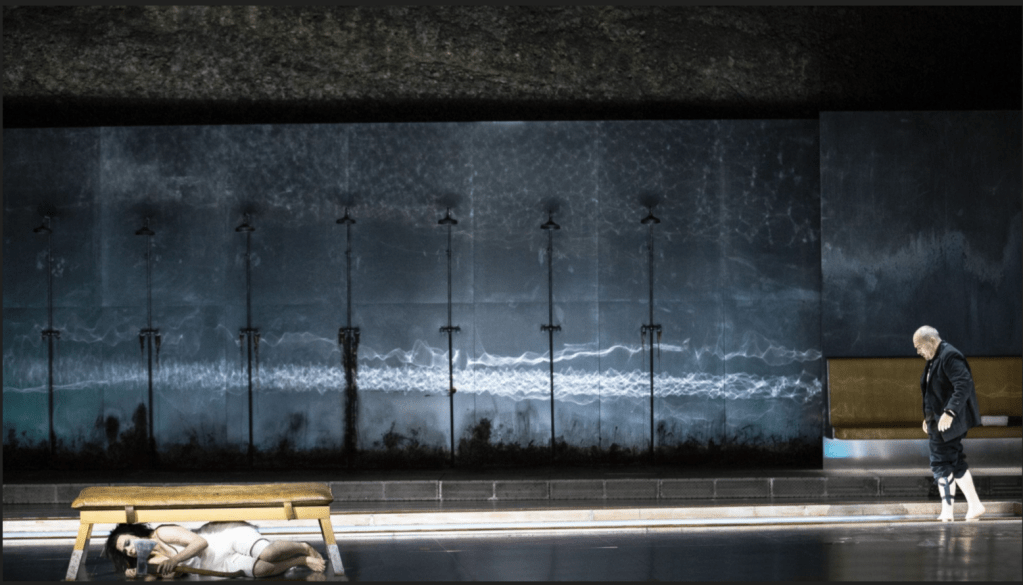
Taking advantage of the theatre’s size and elongated layout, the director divided the stage into two parts: on one side a sort of atrium where water is omnipresent evoking the outdoors; on the other side an enclosed glass cage where the action takes place – at times visibly and at times not. The latter is the room where Clytemnestra lives as a recluse. Story, dialogues and commentaries unfold on the one side, dramatic action on the other. These spaces, superbly lit, occupy the entire width of the immense Felsenreitschule stage while still allowing for areas conducive to intimacy, no minor feat, that. A video, created by Kamil Polak, makes it possible to visualize and even zoom in on specific details, or, on the contrary, to create striking effects that invade the entire space, such as the appearance during the final crime scene of a huge bloodstain covering the entire stage backdrop, which is gradually overlaid by a swarm of flies. When the characters enter the stage for the first time, they cross a long pool of water, from which, strangely, they emerge barely wet, and reveal their involvement in the plot.
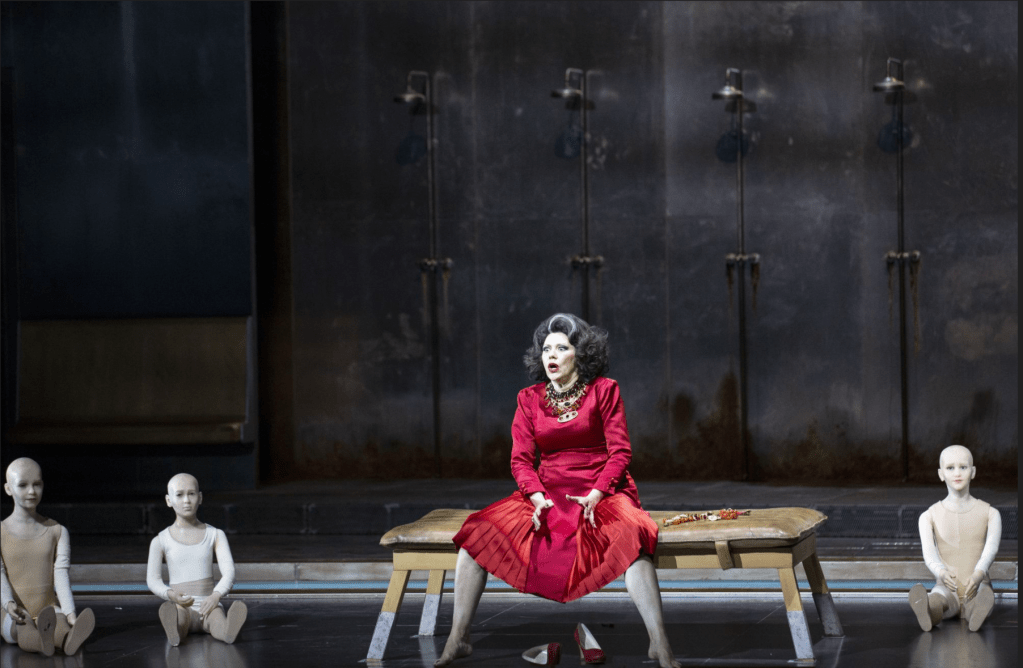
Warlikowski’s slight departure from the libretto and his addition of a sort of prologue at the start of the opera in the form of an impassioned recitative in which Clytemnestra justifies Agamemnon’s assassination by denouncing the multiple crimes he committed, further adds to the story’s ambiguity. Who, in fact, are the good guys and who are the bad ones? Which crimes should one avenge and which should one turn a blind eye to? The choreography appears to raise more questions than it resolves, thereby underscoring the libretto’s richness.
It is the feeling of intimacy present in most of the staged scenes that gives the dramaturgy its strength; for the main action occurs at a distance far from the loudest sonic excesses. Focused on the four main characters – Clytemnestra and her three children – the production does not need any transposition to another time or place to achieve its goal: the thirst for revenge, anger, despair, fear, and the determination to face one’s destiny are all universal feelings. Assisted by the playwright Christian Longchamp, Warlikowski does a superb job of conveying these feelings visually, insisting, in particular, on the implacability of a woman’s will when faced by her duties, which here are also her destiny. In addition to the use of video and lighting play with colors, some of the characters are doubled, in this case effigies of the three siblings who survive their mother’s regicide.
Besides the choreography’s exceptional coherence, another major virtue of this production is the strong feeling of humanity which pervades it, directly touching the viewer’s heart. Certainly, Elektra’s hysteria is omnipresent, but her character is not defined solely by this neurotic element. Orestes’ grim determination is not to be underestimated, nor is Clytemnestra’s particularly fragile position. As for Chrysothemis, under the cover of her innocent demeanor she may, one suspects, be the one pulling all the drama’s strings. A rich balance is developed in the portrayal of each character, doing justice to both Sophocles and Hoffmannsthal and, in the process, fully engaging the viewer’s intelligence.
The four main singers, all well cast, are on the same high level as the staging and choreography, with no one voice dominating the others. Aušrinė Stundytė is masterful as Elektra. The Lithuanian soprano, trained in Vilnius and Leipzig, fully reveals her supple artistry, eschewing histrionics and excessive volume in favor of expressive directness, giving credibility to her character, which is full of contrasts and conflicting passions. Her voice is powerful but not heavy. She intelligently spares her instrument to be able to finish in style, delivering a stunning performance. Her compatriot Asmik Grigorian takes the role of Chrysothemis, obviously a much less complex character. Her vocal performance, though, is of equal quality, the tone very pleasant with a great variety of colors and feelings. Tanja Ariane Baumgartner, a pure product of the German school, has mainly established herself in the great Wagnerian roles, where her rich mezzo voice works wonders. Here, she offers a particularly ambiguous Klytaemnestra, both guilty and a victim, a woman overwhelmed by her feelings and passions, without illusions about how things will end, and therefore particularly moving. As Orest, the main male character, English baritone Christopher Maltman also offers a fine performance. With great economy of means, he performs his role in an introverted, dark, implacable way, as if carrying out the will of someone other than himself. He previously delivered a remarkable performance in Oedipus (Enescu) during the 2019 season, with the same qualities of tone, power and dramatic commitment. The intervention of tenor Michael Laurenz in the role of Aegisth does not detract from the uniformly high quality of this outstanding cast.
The musical performance was entrusted to maestro Franz Welser-Möst and the Vienna Philharmonic. Their great familiarity with Strauss’s music enabled them to fully reveal the fluidity, rich tones, and dynamic range of the opera’s very dense score. Every detail of the orchestration is explored. As an example, each rich intervention of the woodwinds is perfectly integrated with the deeply lyrical and generous sounds of the strings. The orchestra afforded the singers total comfort, both by the richness of the timbres and the flexibility of the melodic line, supple phrasing. Indeed, the vocal line seemed to emanate from the orchestra itself, creating a total symbiosis with the singers, the whole rendered all the more persuasive by Welser-Möst’s elegant and assured conducting.
The pleasure was palpable in the absolutely packed and enthusiastic hall. The vaccination verification at the entrance and compulsory FFP2 masks made their own contribution to the success of the evening, which was saluted with long ovations.
Richard Strauss, Elektra, op. 58
Concert Association Vienna State Opera Chorus
Vienna Philharmonic
Franz Welser-Möst, Conductor
Krzysztof Warlikowski, Director
Małgorzata Szczęśniak, Set Designer, Costume Designer
Felice Ross, Lighting Designer
Kamil Polak, Video Artist
Christian Longchamp, Dramaturgy
Claude Bardouil, Choreography
Huw Rhys James, Choirmaster / Chorus director
Cast
Tanja Ariane Baumgartner, Klytämnestra
Aušrinė Stundytė, Elektra
Asmik Grigorian, Chrysothemis
Michaël Laurenz, Aegisth
Christopher Maltman, Orest
Peter Kellner, Orest’s Tutor
Evgenia Asanova, The Confidante
Verity Wingate, The Trainbearer=
Matthäus Schmidlechner, A Young Servant
Jens Larsen, A Old Servant
Sinéad Cambell-Wallace, The Overseer
Monika Bohinec, First Maidservant
Noa Beinart, Second Maidservant
Deniz Uzun, Third Maidservant
Regine Hangler, Fourth Maidservant
Christina Gansch, Fifth Maidservant

