Nélida Nassar 03.04.2022
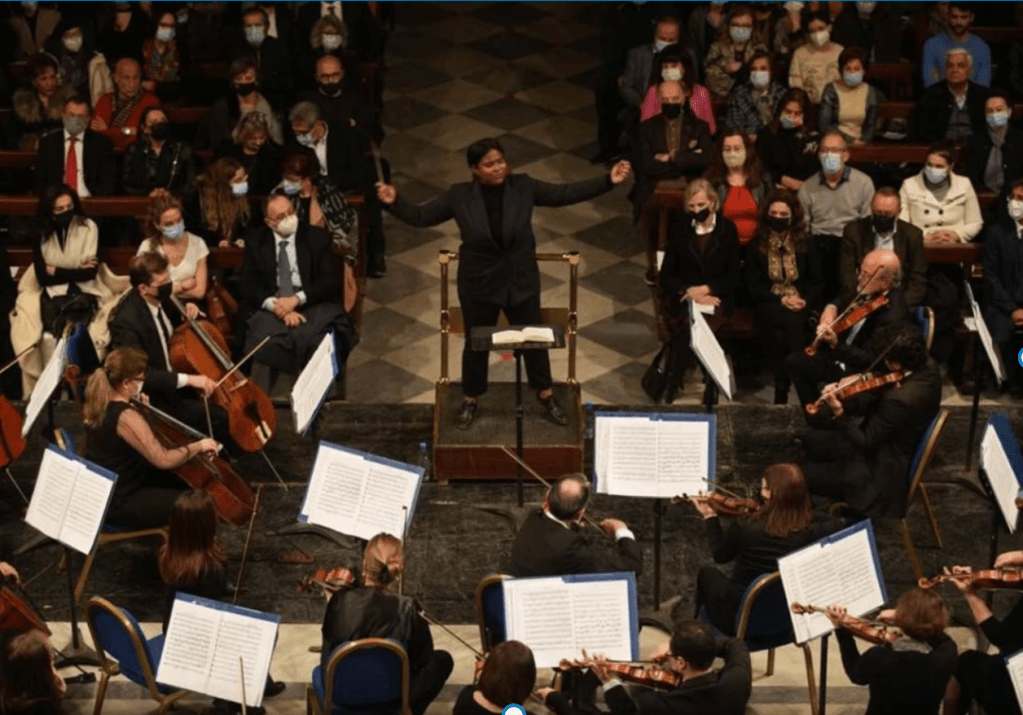
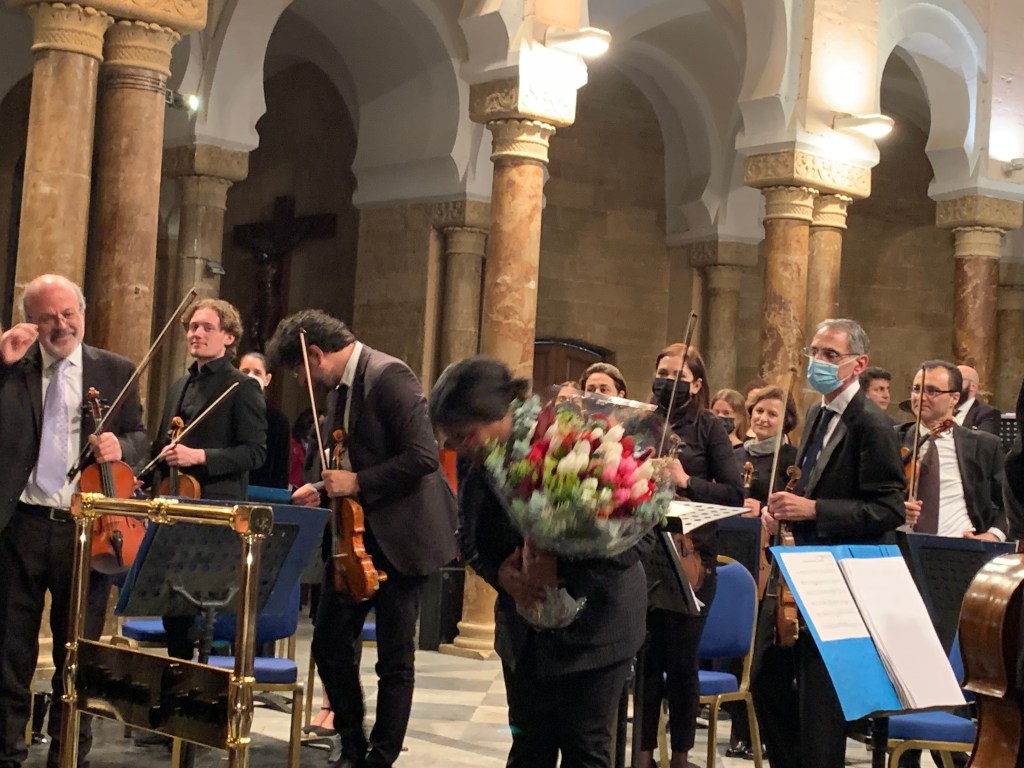
The Lebanese values of universalism and tolerance were intensely present last Friday at the Al Bustan International Festival for Music and the Performing Arts. In the face of all the dire conditions the country is experiencing, with many people suffering from hunger and economic strife amid a continuing financial crisis, the Festival brought a note of cheerfulness and happiness into this sad environment.
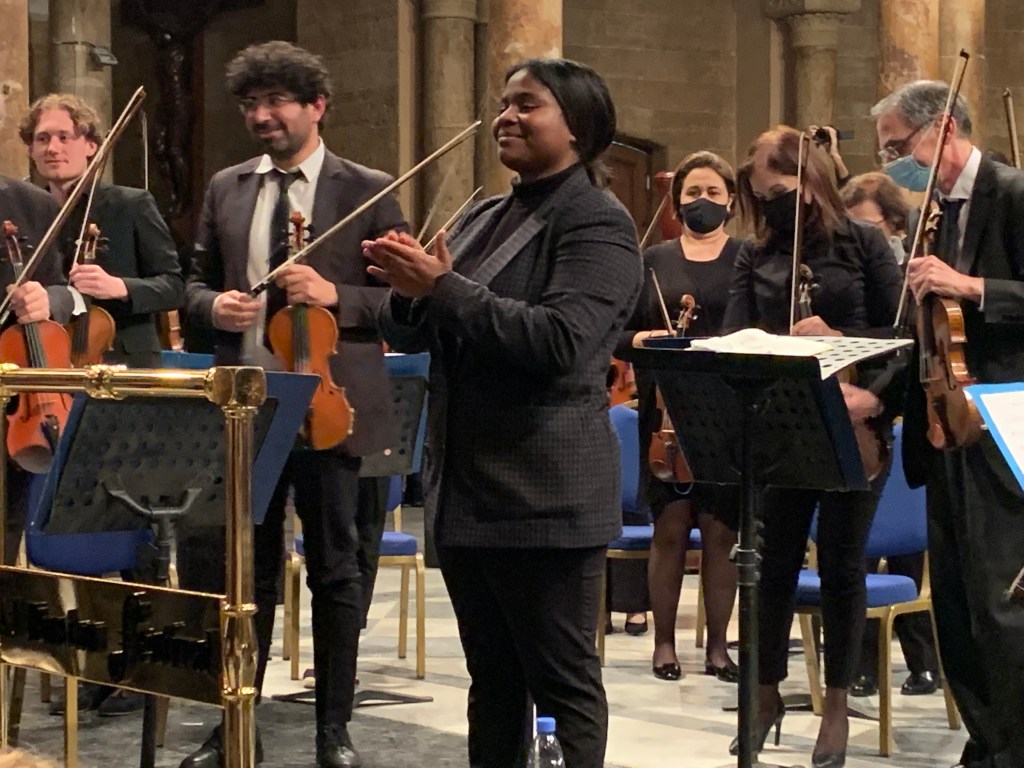
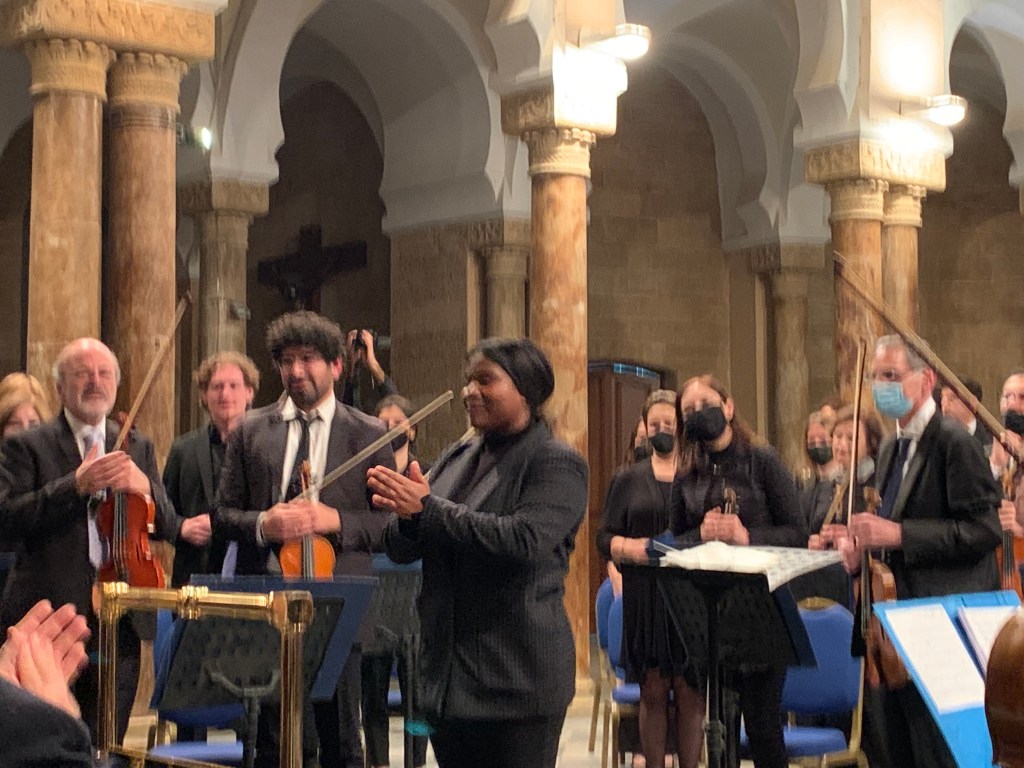
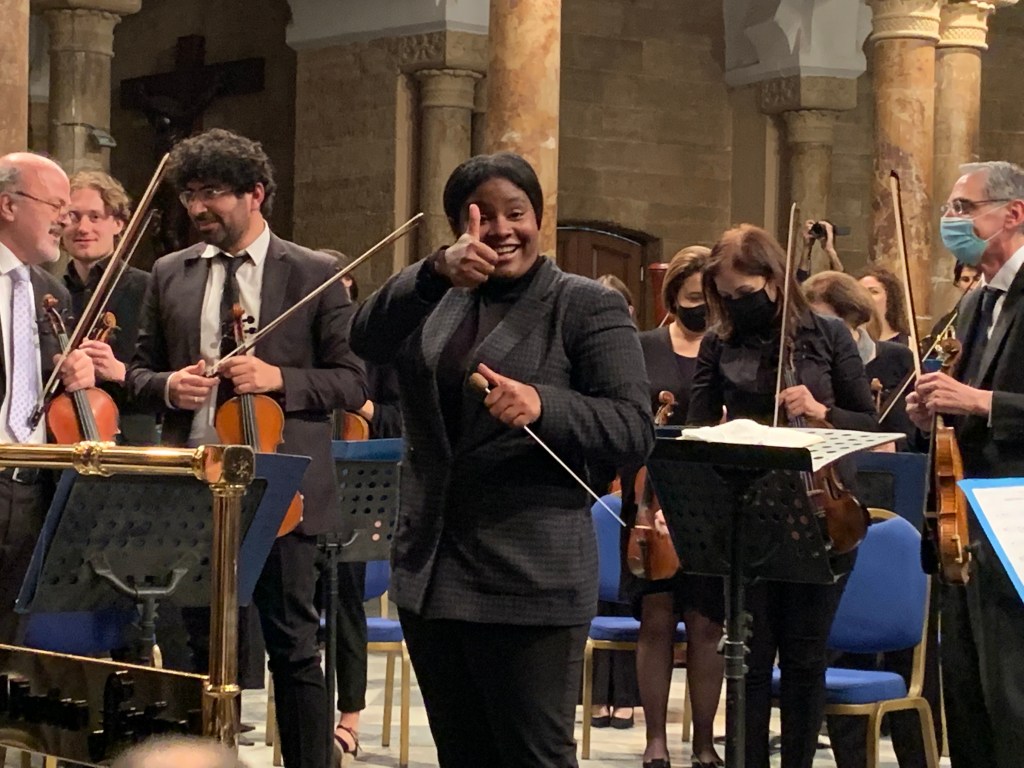
These values were reflected in the festival’s welcoming of the Venezuelan Latina-African Maestra Glass Marcano, which represented a first for it in several respects (a woman conductor, Latina, Black and from a economically bankrupted country, like its host country Lebanon). As fate would have it, she conducted a program of mostly Russian music at a moment when Putin’s tanks were advancing into Ukraine. Even with the world being in such a state of entropy, of disorder, and of uncertainty, music and the arts continued to arouse powerful, unique emotions that brought much joy to the audience.
The concert with the Lebanese Philharmonic Orchestra could not have presented two more contrasted Russian masterpieces: Tchaikovsky’s beguiling “Waltz of the Flowers” from The Nutcracker and his terrifying Fourth Symphony. Glass Marcano’s interpretations eschewed the conventional conceptions of these pieces. She allowed the orchestra to sparkle and indulge itself in the melodies of the glorious Waltz. Tchaikovsky’s fourth Symphony is famous for its melancholy, represented by a fierce motto blared out by the brass at the start; and the immense first movement, with its spectral dances and intimations of disillusionment, twists conventional symphonic structure into something radically new and intensely personal.
The composer wrote to his patron von Meck: “Never yet has any of my orchestral works cost me so much labour, but I’ve never yet felt such love for any of my things.… Perhaps I’m mistaken, but it seems to me that this symphony is better than anything I’ve done so far.” Such enthusiasm was rather unusual for Tchaikovsky, who typically expressed great dissatisfaction with his works. In this case, however, he evidently felt that he had exceeded even his own demanding standards. The piece bore a dedication “to my best friend,” a reference to von Meck, who agreed to accept the honor only if she remained anonymous.
One could argue that Marcano’s tempi in the Fourth were on the fast side especially in the slow movement, though taken as a whole the performance’s hurtling momentum and heightened sense of drama just quite enjoyable. The strident sound of the horns and bassoons in the first movement represents fate hanging over one’s head like a sword. The theme suggests an all-consuming gloom that devours any brief glimpses of happiness, which appear mostly in the form of lighter melodies in waltz time. The second movement, Tchaikovsky continued, expresses the melancholy felt at the end of a weary day. The third movement then presents “fleeting images that pass through the imagination when one has begun to drink a little wine.” Emerging from whimsy, the fourth and final movement projects bold, positive energy. Although the dark opening theme from the first movement reappears, as if to remind listeners that fate cannot be outrun, the positive force cannot be suppressed. The work carries its listeners from gloom to melancholy to slow recovery to life-affirming energy.
Rossini’s Overture to William Tell followed, full of suave elegance and flamboyant wit, in a performance far removed from conventional views of the piece as being simply a tuneful, entertaining warhorse. Written for an opera based on a legend about the Swiss hero William Tell, who was an expert with a bow and arrow and who shot an apple off his son’s head, it paints a musical picture of an idyllic life in the Swiss Alps (Isn’t Lebanon referred to as the Swiss of the Middle East?). The playing of the orchestra was charming in all 3 pieces.
As an extra treat at the end, Maestra Marcano could not resist injecting an example of her vernacular Venezuelan music in a mixture of Salsa, Mambo and Joropo syncopated rhythm. She invited the public to participate by clapping their hands to accompany the orchestra. Despite entropy and darkness enveloping us, the public left the concert elated and light hearted.
https://albustanfestival.com/
https://www.lpo.gov.lb/
https://en.wikipedia.org/wiki/Pyotr_Ilyich_Tchaikovsky
https://en.wikipedia.org/wiki/Symphony_No.4(Tchaikovsky)
https://en.wikipedia.org/wiki/William_Tell_Overture
https://fr.wikipedia.org/wiki/Glass_Marcano

