Nélida Nassar 02.09.2022
On a glorious, sunny day I headed to the city of Byblos, modern Jbail, an ancient port on the coast of the Mediterranean Sea , about 20 miles (30 km) north of the modern city of Beirut, Lebanon. It is one of the oldest continuously inhabited towns in the world, historically a great trade center, and the place where the Phoenician alphabet was developed.
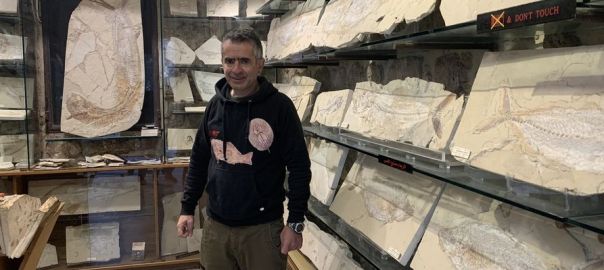
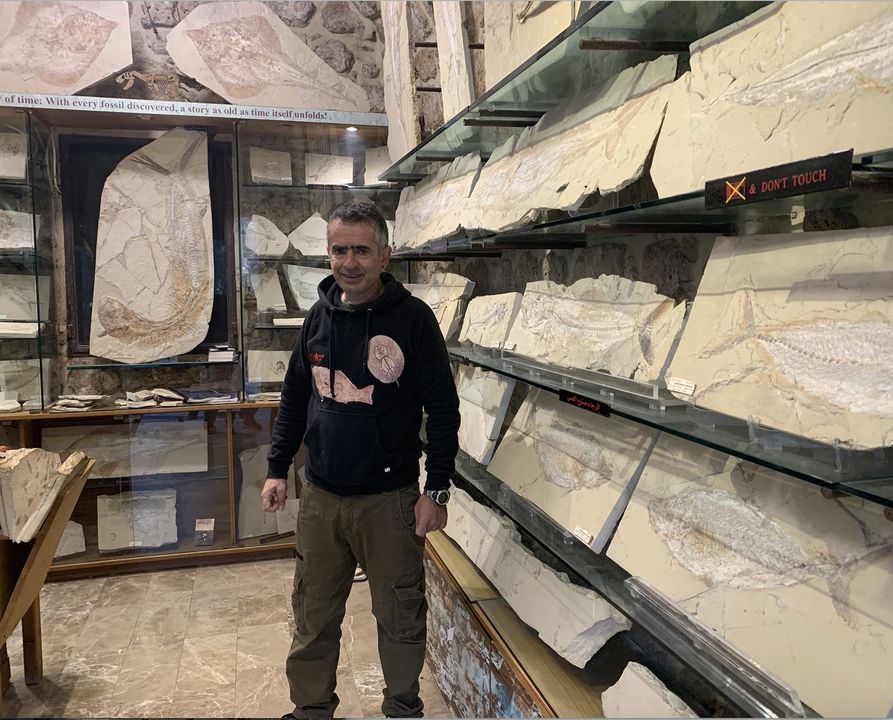
While there I had the privilege of spending several hours in the company of scientist and historian, Pierre Abi Saad, one of the few Lebanese paleontologists to combine the functions of researcher and teacher. He directs the excavation at Haqil – which has belonged to his family for three generations – a site 800 meters above Byblos, where he looks for fossil remains of plants and animals. He studies and analyzes them in his laboratory, sorting, dating, describing and classifying them using very sophisticated technologies (3D modeling, scanner, etc.). He then shares his discoveries and research work with the international scientific community through the publication of articles and participation in conferences (in the US at the Smithsonian in Washington DC, The New York Historical Society Museum, the Fields Museum Chicago; in France at the Musée des Confluences, Lyon and the National Museum of Natural History; and at other museums and institutions worldwide).
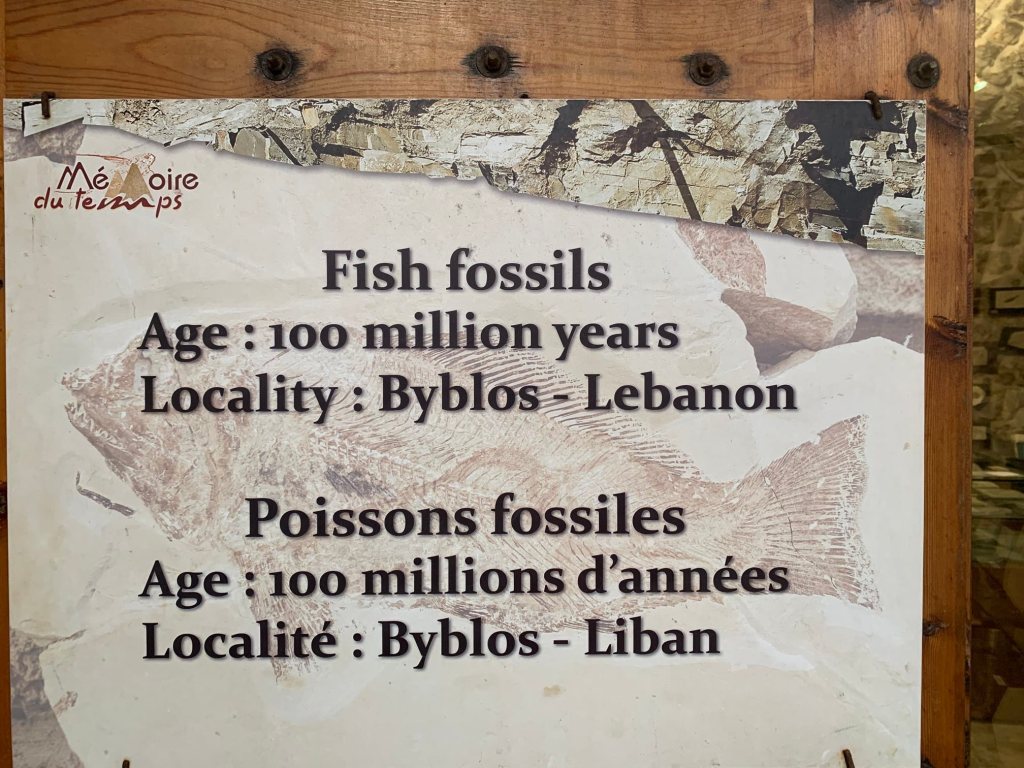
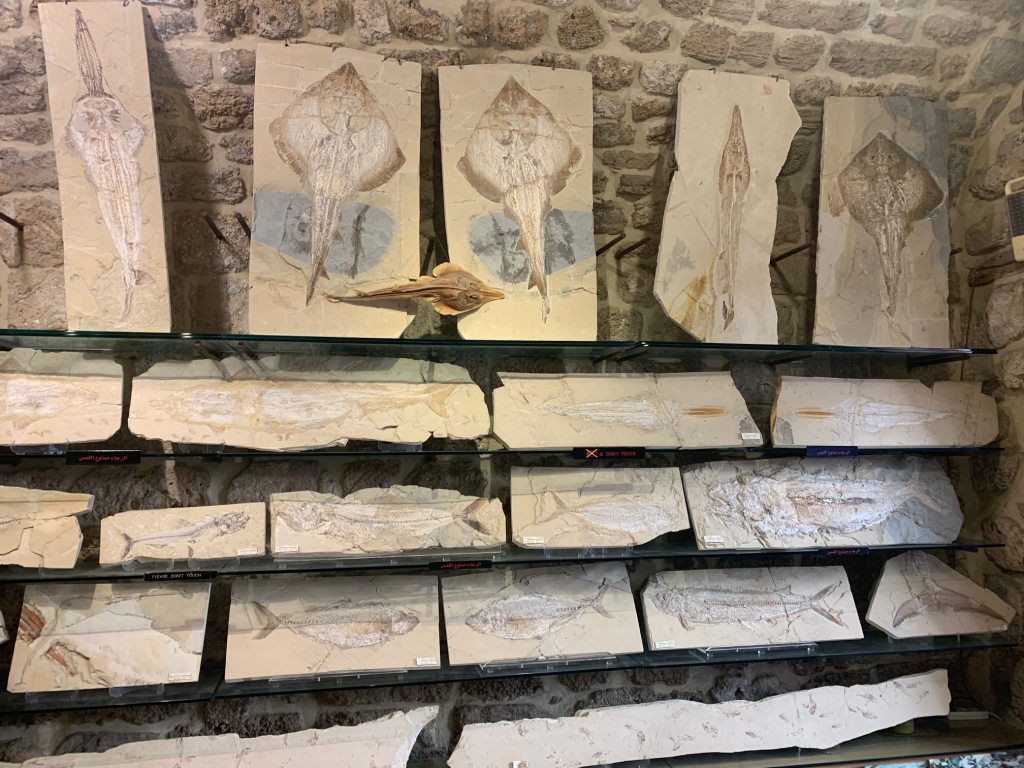
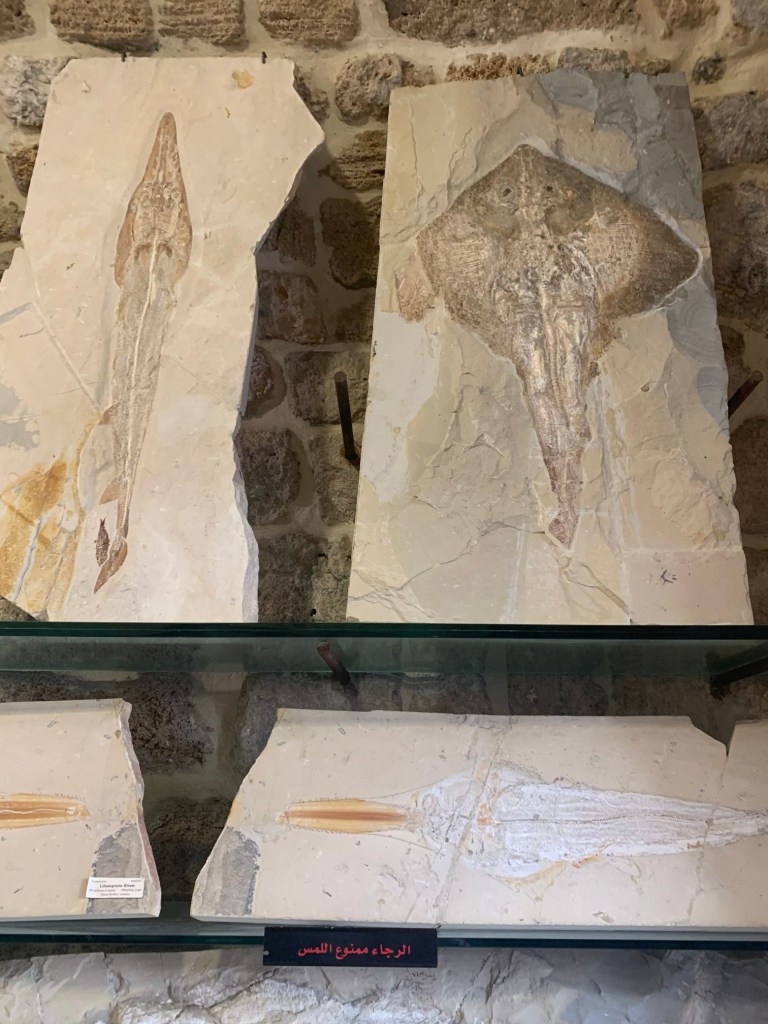
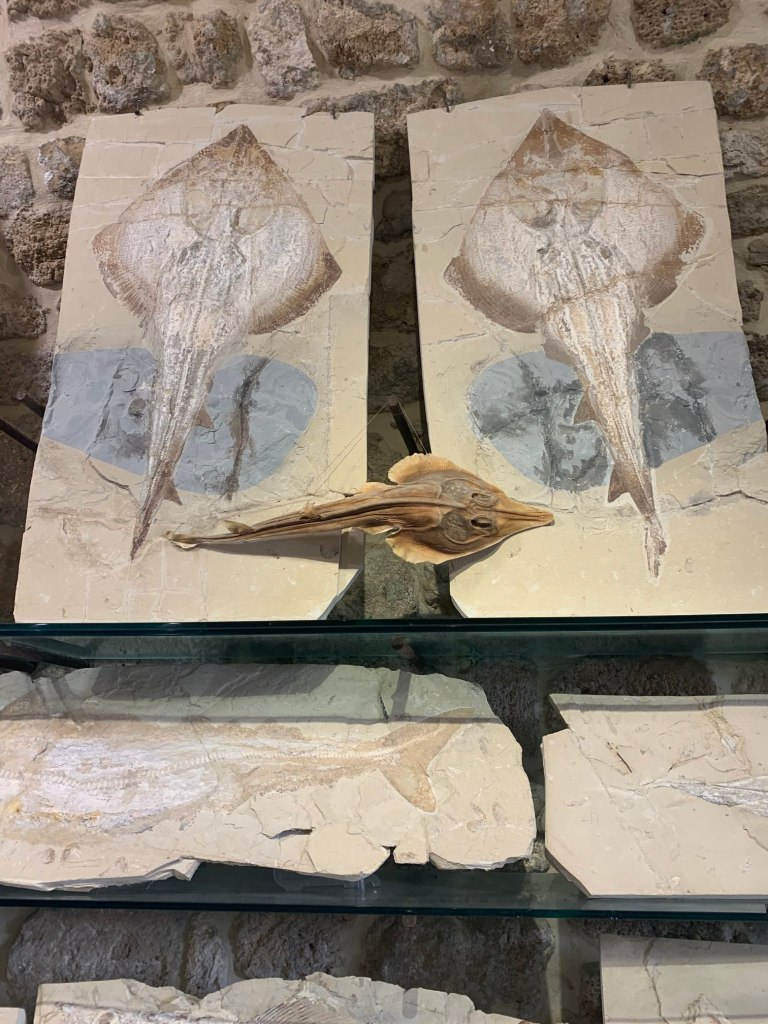
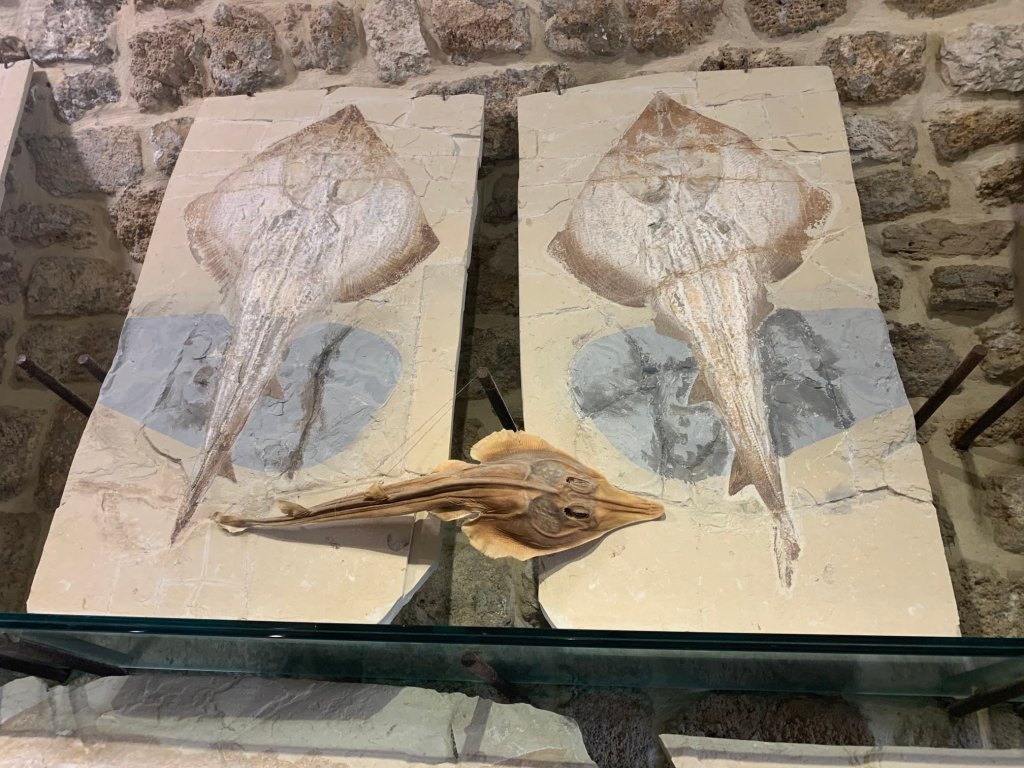
The stonefish and fossils of Lebanon he studies – located in En Nammoura, Haqil, Hgula and Sahel Alma – are among the most beautiful fossils in the world, and date to the Cenomanian Stage of the Middle Cretaceous, about 95 million years ago. The fossils are preserved in a very fine-grained laminated limestone micritic), formed by the recrystallization of lime mud.
It is believed that the fossils in Lebanon were formed by the rapid filling of an ocean basin by sediments from the continental shelf. Tectonic activity – either from volcanoes or rapid shifting of tectonic plates – may have caused this sudden underwater landslide, quickly submerging and killing everything it its path. An anoxic environment (i.e. one lacking in oxygen) led to the preservation of soft-bodied creatures that are rarely preserved, including cartilaginous sharks that even show the outlines of their skin.
Long before its independence, Lebanon was celebrated by many travelers for its stones with the imprints of fish or crustaceans, which today are exhibited in many museums, including the Mineral Museum in Beirut (MIM), or carefully preserved in private collections. For a long time, questions about the fossilization of these marine animals or their presence at the top of certain mountains, far from present-day shorelines, remained unanswered.
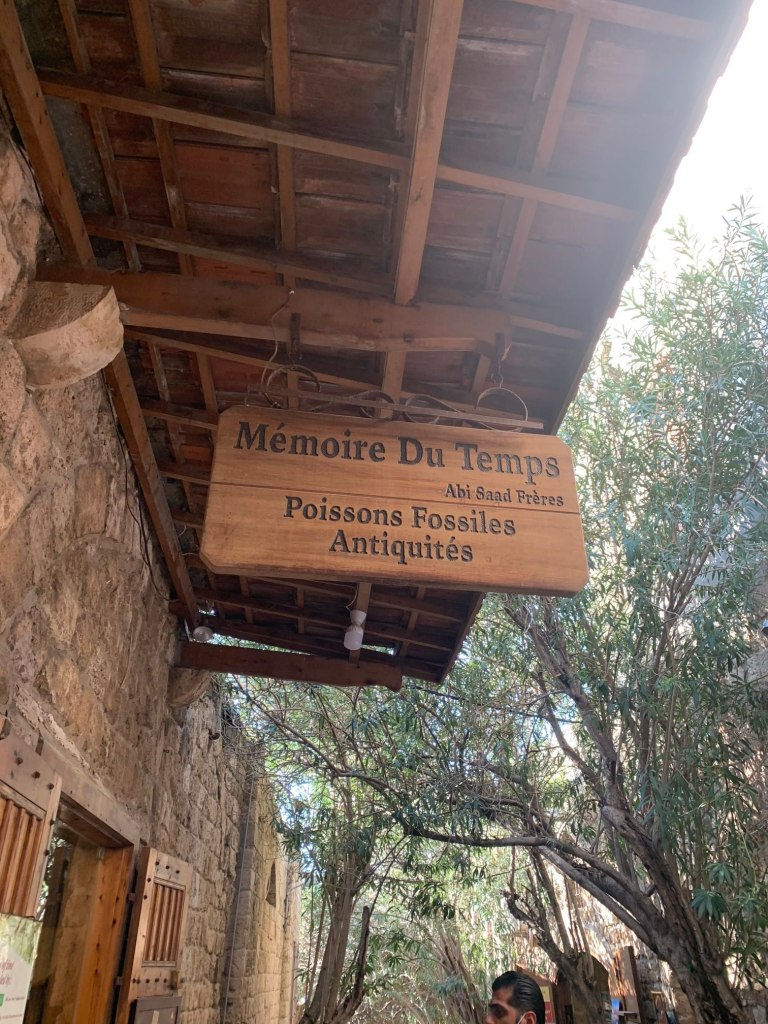
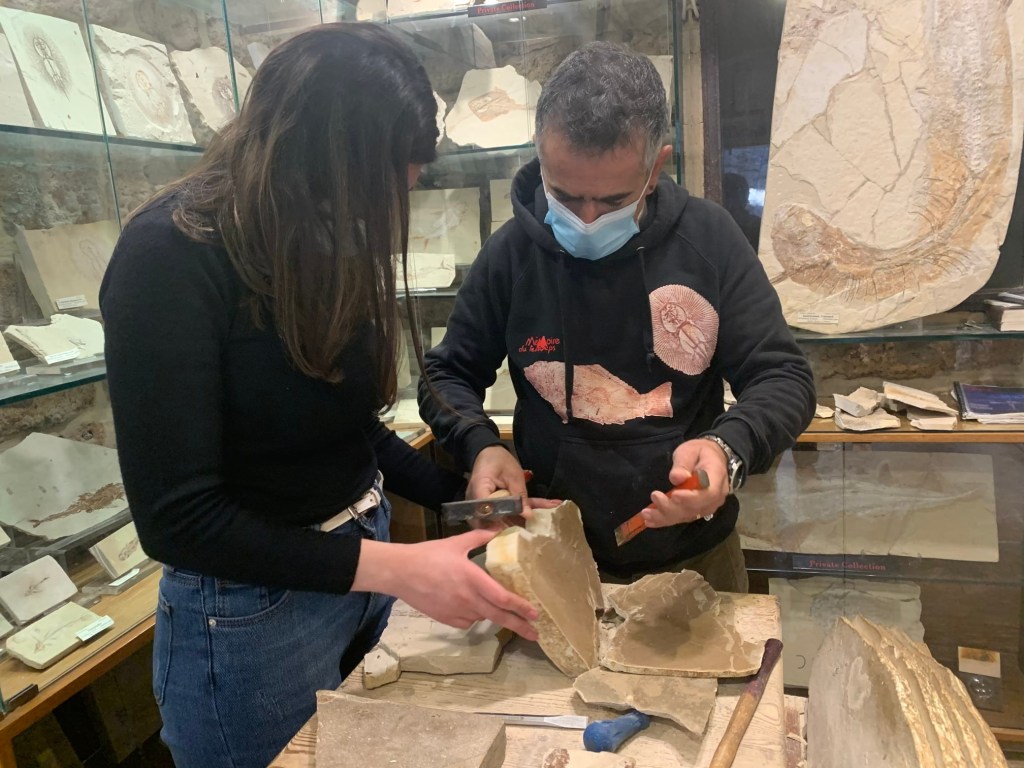
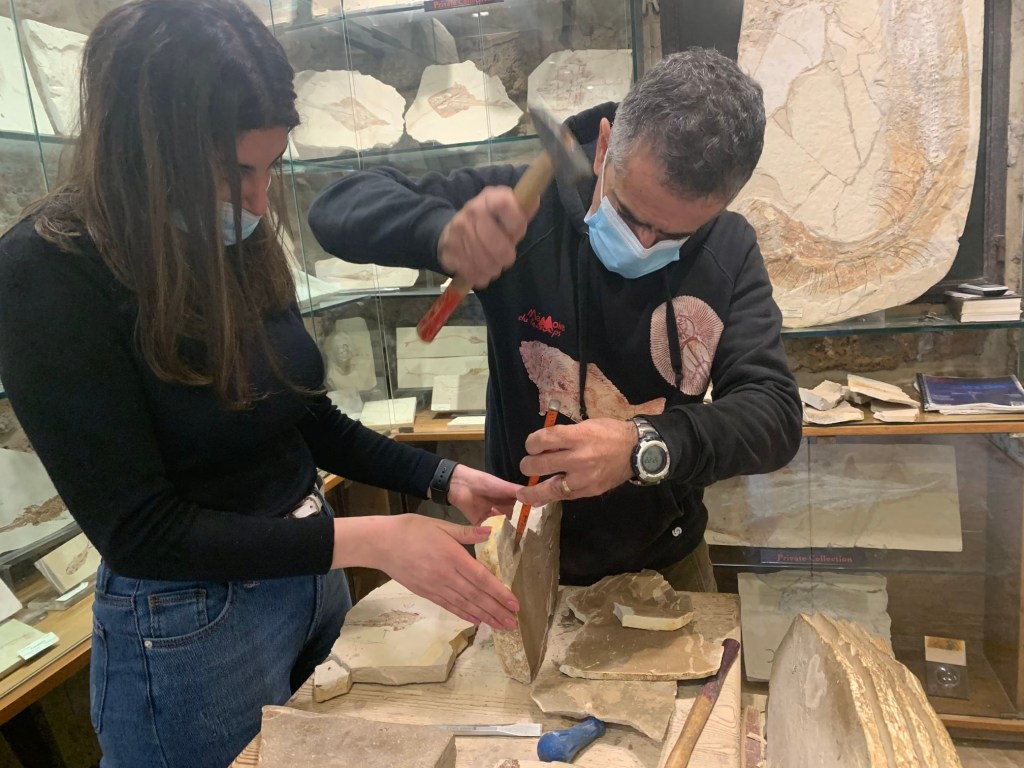
Abou Saad has provided brilliant solutions to some of these puzzles. In addition to his research activities, he is a superb teacher, generously transmitting his knowledge to each of the visitors at the Fossils Museum “Mémoire du Temps” located in the old souk of Byblos. Incidentally, the name Byblos is Greek, and papyrus received its early Greek name (byblos, byblinos) from its being exported to the Aegean through Byblos. Hence the English word Bible is derived from Byblos, “the (papyrus) book.” Abou Saad is also skilled in many areas beyond his specialty. His passion is infectious and his knowledge abundant. He taught me how to find a fossil, identify it and how to break away the stone around it with a chisel and a hammer. I returned home with gifts of several fossils and numerous seashells, along with Fish Fossils, a book he wrote with his professor, Mireille Gayet, and one of his colleagues, Anne Belouze. I am grateful to Dr. Pierre Anhoury, Public Health Expert and Oncologist and Director of International Relations at the Institut Curie, for introducing me to Pierre. These kinds of encounters convince one that Lebanon is indeed a land worth saving.
https://fr.wikipedia.org/wiki/Mus%C3%A9e_des_fossiles_de_Byblos
https://en.wikipedia.org/wiki/Byblos_Fossil_Museum
https://www.linkedin.com/in/pierre-abi-saad-025123a1?originalSubdomain=lb
https://www.babelio.com/auteur/Pierre-Abi-Saad/188839
https://en.wikipedia.org/wiki/Mim_Museum
https://en.wikipedia.org/wiki/Byblos
https://en.wikipedia.org/wiki/Smithsonian_Institution
https://en.wikipedia.org/wiki/New-York_Historical_Society
https://www.fieldmuseum.org/
https://museedesconfluences.fr/fr
https://en.wikipedia.org/wiki/National_Museum_of_Natural_History,_France

