Nélida Nassar 06.04.2023
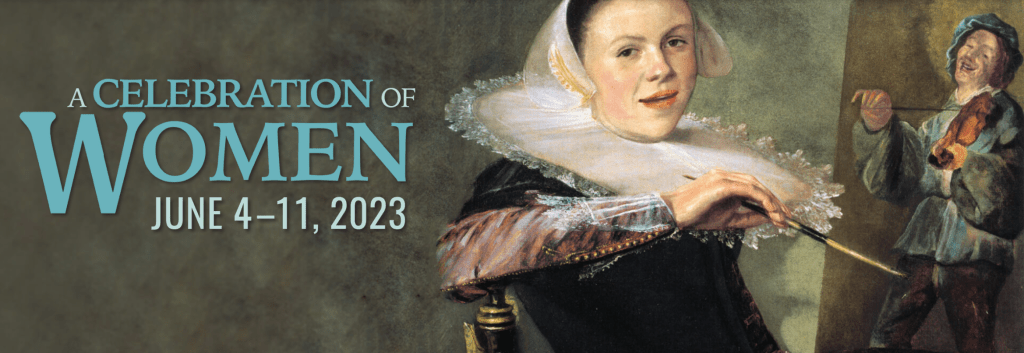
A beacon in the music scene of our city is the bi-annual Boston Early Music Festival (BEMF). Internationally renowned, it offers eight days of world-class music making, featuring operas, choral and orchestral concerts, solo and chamber music recitals, talks, and exhibitions, all held in Boston’s beautiful churches and music venues. One of the elements which makes the festival so special is its mixing of local and international talents. Celebrating its 33th anniversary this year, BEMF is thought to be the longest-running early music festival in the US.
The festival’s packed daytime schedule now includes family events and community projects. The aim is to create musical experiences and opportunities that do not ordinarily exist in Boston and to show that early music is something which is open to all, thereby helping to ensure that future generations will grow up loving music and making it a part of their lives.
The central role played by BEMF volunteers gives the Festival a character and an atmosphere like no other. It is widely recognized for its friendly welcome and the clear sense that, perhaps more than any other festival, it truly belongs to its audience.
From the start it has been headed by executive director Kathy Fay, whose great management skills, vast knowledge of the world of opera and solid artistic skills are legendary. She is talented, hardworking, and ambitious, qualities which she has dedicated to the Festival for over three decades. Like the artistic directors, Emmy-award winners Stephen Stubbs and Paul O’Dette, and the stage director, Gilbert Blin, she is a visionary whose objective is to make the festival the leading early music musical event on this side of the Atlantic.
Among BEMF’s other notable achievements, it has already contributed to the musical public’s rediscovery of some of the forgotten treasures of the early opera repertory. Among these are: Agostino Steffani’s Orlando generoso (1691); André Campra’s Le Carnaval de Venise, (1699); Marc-Antoine Charpentier’s Versailles: Portrait of a Royal Domain, (1682); The Monteverdi Trilogy: Il ritorno d’Ulisse (1640), L’incoronazione di Poppea (1642), Le nozze d’Enea (1641); Giovanni Battista Pergolese’s La serva padrona Livietta & Livietta e Tracollo;Marc-Antoine Charpentier’sOrfeo: La descente aux Enfers (1686); Agostino Steffani’s Niobe, Regina di Tebe, (1688); Henry Purcell’s Dido and Aeneas (1689); and three more works by Handel: Almira (1705), Acis and Galatea (1718), and Alcina (1735). This edition is bringing to its viewersHenry Desmarest’s rarely staged Circé.
Louise-Geneviève Gillot de Saintonge is the librettist of Circe, as she is of Dido, the first work by Desmarest, rediscovered two years ago. The opera is inspired by the Odyssey and has as its setting Ulysses’s stay on the island of the queen and magician Circé. She is madly in love with him; the latter ostensibly returns her love, but does so only out of trickery, to ward off being bewitched. He still loves Éolie, a nymph who lands on the island at the start of Act III. Another nymph, Asteria, close to Circé, is in love with a member of Ulysses’ retinue, Polite. But she is coveted by Elphenor, whom she rejects.
The intertwining of these gallant intrigues gives rise to a succession of scenes of spite and love, jealousy and tenderness. Only Aeolia’s appearance in the middle of Act IV, in search of Ulysses, tortured by the Eumenides whom Circé invoked, reconsiders a topos in an unexpected way. Lost, unable to find her way, she exclaims: “Alas! one easily gets lost / When one has only Love as a guide’, giving meaning to the situation she finds herself in, confirming the traditional moral lesson that being in love makes one blind and alters one’s judgment.
BEMF recorded Circé in Bremen, Germany, where the main role was performed by mezzo-soprano Lucile Richarlot, who was supposed to repeat it live during the festival, but who withdrew for family reasons. She will be replaced in Boston by Canadian soprano Karina Gauvin. Would Circé be cursed? In this context, we can only praise the bravery and perseverance of Ms. Fay and her staff as well as all the participants in this production, for having supported and ensured the performance and premiere of this special opera.
Fay’s tasks are challenging and manifold, considering that at each festival BEMF presents two, and sometimes even three, operas, not to mention numerous outstanding concerts. She is responsible not only for assembling the many local and international musicians who participate each time but also for editing the programs, maintaining the archives, and supervising BEMF’s recording and fundraising activities.
Boston’s musical institutions and universities are world famous, and its symphony, the BSO, founded in 1881, is one of the oldest and most prestigious orchestras in the world. Since its creation in 1980, BEMF has greatly contributed to the city’s music scene and has become a symbol of its cultural dynamism.
BEMF
2023 Festival | June 4–11, 2023

