Nélida Nassar 02.21.2021
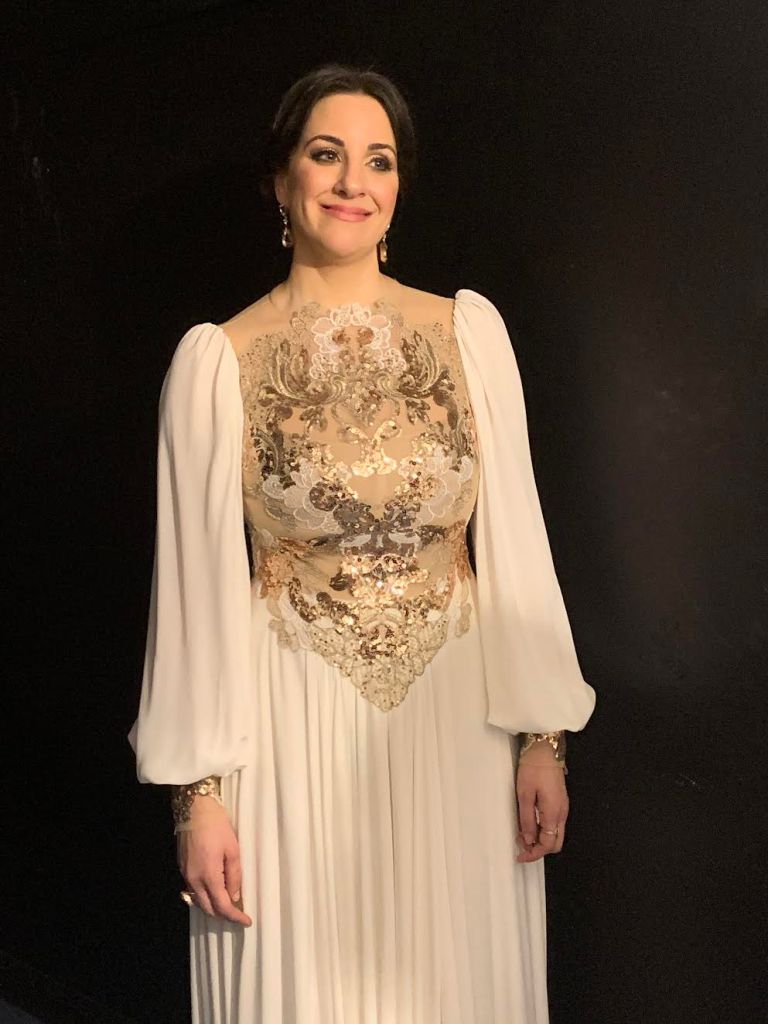
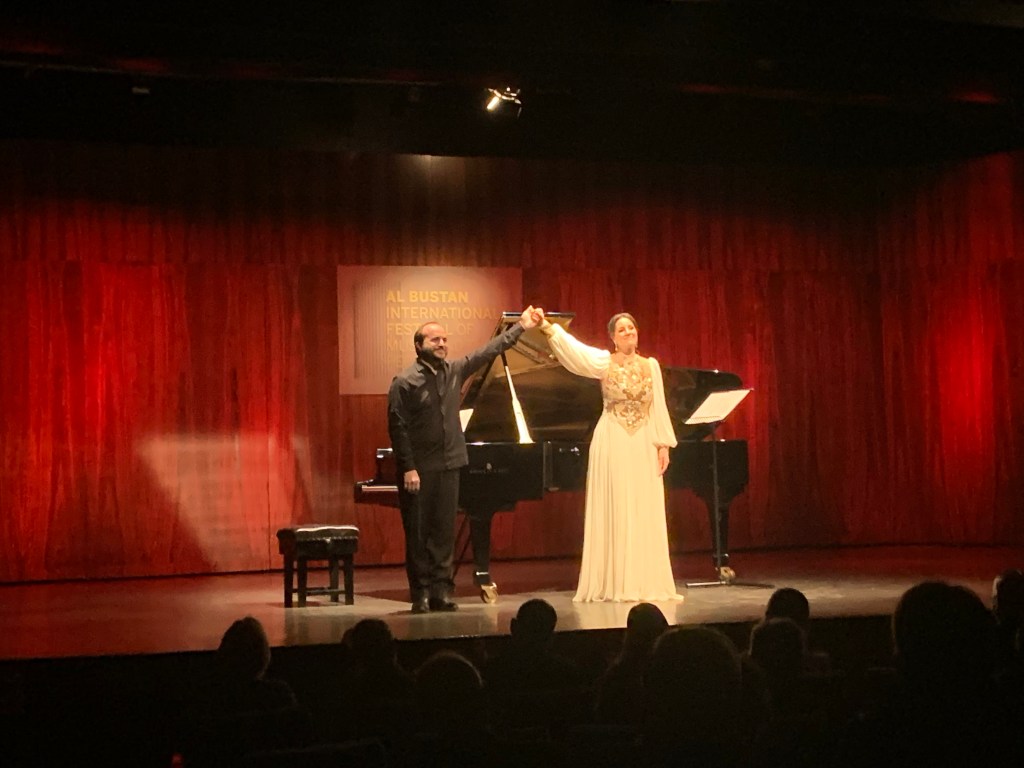
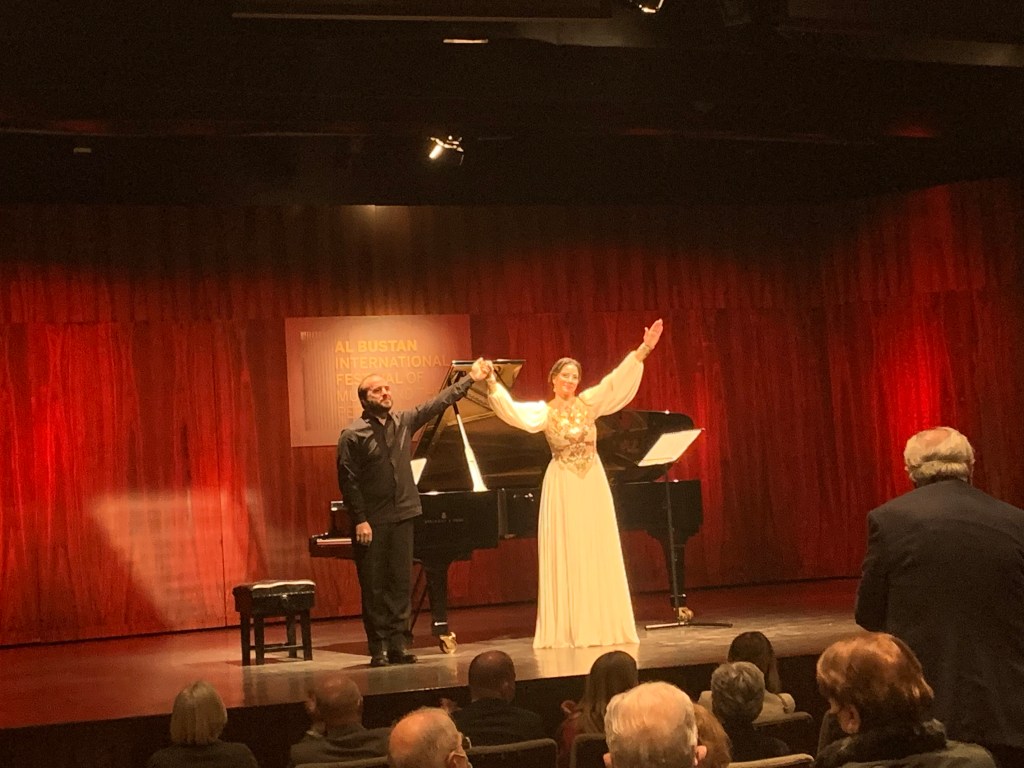
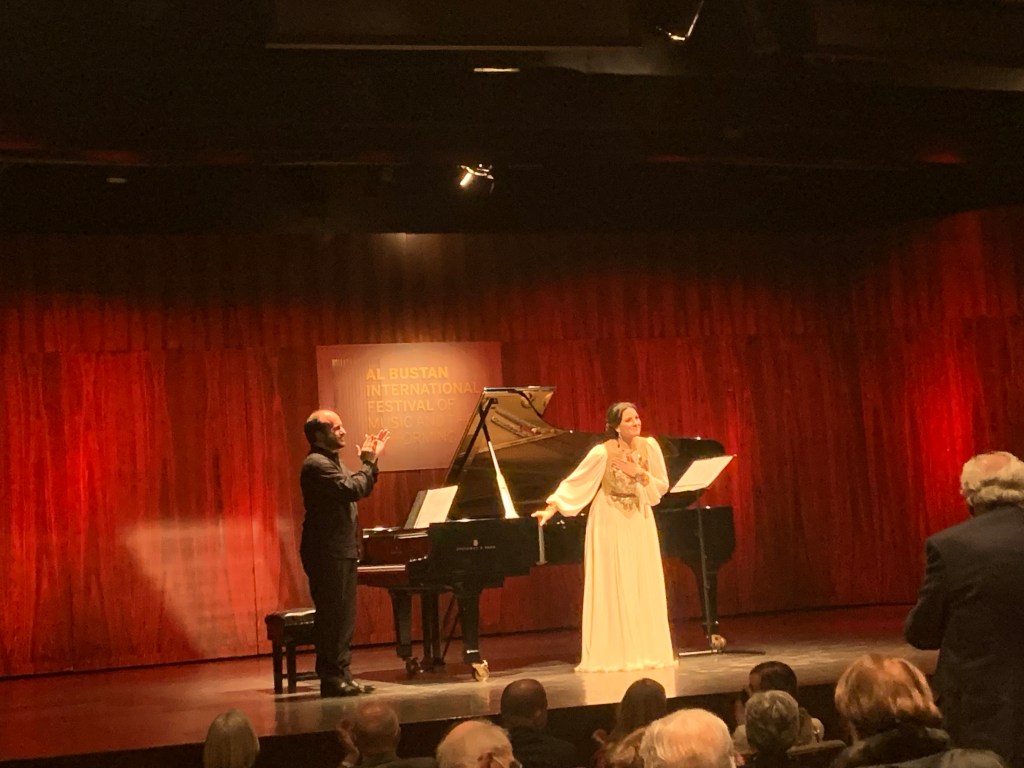
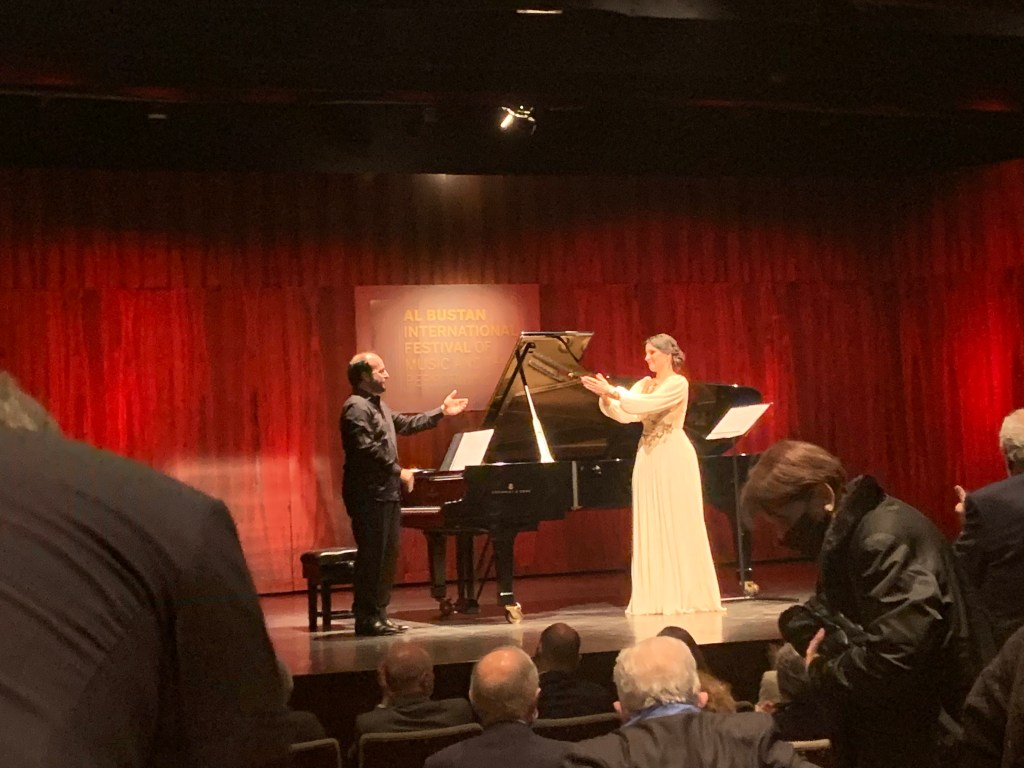
Lebanese-Canadian soprano Joyce El-Khoury opened the 2022 edition of the Al Bustan Festival. The public, back in the concert hall for the first time in two years, gave the singer a warm welcome. A tall, noble figure with dark, expressive eyes, and wearing an elegant silver and black billowing dress, she immediately captured the audience’s attention and set the right tone for an evening devoted, in its first part, to Verdi’s bel canto arias, followed, in the second, to Puccini’s verismo arias. This music is among the most dramatic in the Italian repertory for soprano, and very few singers nowadays have what it takes to perform it properly. That number is even fewer when, as here, we are talking about some of these composers’ most formidable. They all require a large and beautiful voice, backed up by a spectacular technique to master the coloratura, trills, floated high notes, and huge climaxes. Joyce El Khoury did not disappoint.
What better way to start than with Medora’s aria from Verdi’s lI Corsaro Non so le tetre immagini. El-Khoury gentle, light sounds, beautiful timber of shaded colors, agility, lyricism, softness with florid legato and subtle phrasing with great outburst conquered us. She then immediately appropriated the harmonic language of Morrò, ma prima in grazia Amelia’s aria from Un ballo in maschera. Her diction was impeccable. Even on the spun notes, of which she has complete mastery, the phrasing didn’t fade at any time. The depth and exquisite color of her voice were matched by her dramatic acting ability across a remarkably broad range of repertoire, including the title role of Elisabetta in Don Carlo. Tu che le vanità must have been quite challenging for her. It has an a capella beginning and one of the hardest introductions in all of opera, encompassing an aria, a recitative, an arioso, and a two-part scene, all enrolled into one. Here she had to display her high and low registers, forte and pianissimo volumes, legato bel canto, and several different dramatic emotions, including reverence, longing, and resignation. Most of this went well, with only a few weak moments in evidence. Finally, from Il Trovatore came D’amor sull’ali rosee which, incidentally, was Montserat Caballe’s signature aria. El-Khoury demonstrated elegant phrasing, exceptional vocal control – even in the pianissimi – as well as beautiful trills and dramatic coloratura.
She returned to the stage in a white, virginal dress following the intermission to perform music of Puccini, who loved sopranos as much as they have ever since loved him – he who gives them the chance to really strut their stuff. El-Khoury, a winner of the Met’s Lindemann Young Artist Development Program, was more at ease in these verismo arias than in the Verdi, including Donde lieta (la Bohème); In quelle trine morbide (Manon Lescault); Vissi d’arte (Tosca); and Un bel dì vedremo (Madama Butterfly). Singing them radiantly, and with remarkable vocal agility, she had the brightness and fluidity in the high notes of the lirico-spinto soprano she is, but was also able to “push” to dramatic climaxes without strain, and at times could reach a darker timbre. Her voice not only sustained those long, flowing lines of melody; she managed to add a painter’s palette of color to achieve an emotional and dramatic depth that enchanted the audience.
At the piano, the festival’s musical director Gianluca Marcianò, electrified the room in his solo piano pieces: preludes from Un ballo in maschera and Attila and intermezzi from Manon Lescault and Suor Angelica. However, he seemed to play more like a soloist even when the pieces required more the approach of an accompanist who listens attentively to the singer. In any case, he failed to conjure up the full range of colors needed to highlight the dramatic action in each song, nor did he create a musical canvas on which Joyce could paint her musical tale. Sometimes he simply drowned out his partner. All the same, it was quite exciting when the two weren’t playing precisely together – but to good purpose, as in those passages where the words demanded such an approach. The piano didn’t hold back whilst the voice was trying to push forwards, or vice versa, creating a distracting tension between the performers.
The exploration of vernacular music is encouraged in each new edition of the festival. “Reconnect” featured operatic arias by Wadih Sabra, the composer of Lebanon’s National Anthem, revealing a lesser known aspect of his music. Sadly, placing the separation duet between David and Jonathan, from his 1938 opera The Two Kings, last performed in 1950, right after the music of the two giants Verdi and Puccini could not have been more anticlimactic. Mixing these immortal composers with the local Wadih Sabra was an obvious programming mistake. Wouldn’t it have been better served by joining it with the Arabic music performances of the rest of the festival? The concert closed on another nationalistic note, though in this instance to better effect, with Joyce’s wonderful rendition of Najib Hankash’s setting of Lebanese philosopher Gibran Khalil Gibran’s legendary poem Aatini Al Naya Wa Ghanni, originally performed by Lebanon’s national diva Fairuz.
In the excitement of returning to a live concert, Lebanon’s music cognoscenti could not restrain themselves from recording, photographing or sending pictures through their electronic devices. El Khoury tolerated these infractions with magnanimity and graciousness, leaving her audience breathless just listening to her. This is why we love great Italian opera.
https://en.wikipedia.org/wiki/Joyce_El-Khoury
https://en.wikipedia.org/wiki/Il_corsaro
https://www.rayfieldallied.com/artists/gianluca-marcian%C3%B2
https://en.wikipedia.org/wiki/Un_ballo_in_maschera
https://en.wikipedia.org/wiki/Il_trovatore
https://en.wikipedia.org/wiki/Manon_Lescaut
https://en.wikipedia.org/wiki/Tosca
https://en.wikipedia.org/wiki/La_boh%C3%A8me
https://en.wikipedia.org/wiki/Madama_Butterfly
https://en.wikipedia.org/wiki/Attila_(opera)
https://en.wikipedia.org/wiki/Suor_Angelica
https://greatsong.net/traduction-aatini-al-naya-wa-ghanni-fatma-said
https://en.wikipedia.org/wiki/Fairuz

