Nélida Nassar 07.05.2026
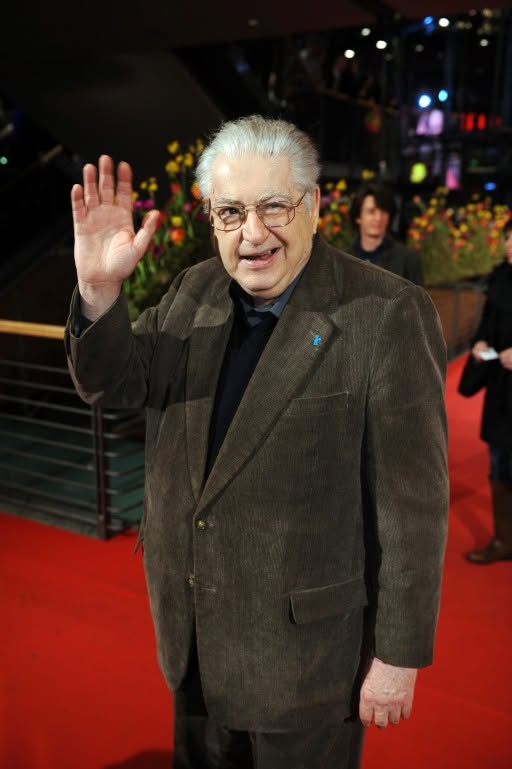
Farewell to Moritz de Hadeln, one of the most influential figures in international film culture dies aged 85. UK-born Moritz de Hadeln Director of the Locarno Film Festival, the Berlinale, and later the Venice International Film Festival helped shape the landscape of world cinema for over three decades.
De Hadeln had begun his career as a freelance photographer for some years, and directed his first documentary Le Pèlé in 1963 before going on to work in various roles in the film industry in Switzerland and Germany.
In 1969, his career in the festival world began when he and wife Erika von dem Hagen founded the Nyon International Documentary Film Festival, now known as Visions du Réel, for which he served as director until 1979. He also assisted his wife when she was head of this festival from 1981 to 1993.
De Hadeln also served from 1972 to 1977 as head of the Locarno International Film Festival Parallel, where he first met Beki Probst, who organized Locarno’s trade show. He was instrumental in introducing the evening open-air screenings on the town’s Piazza Grande to the program as well as several sidebar events such as the Fipresci week and INformation Suisse.
During his tenure as Director of the Berlinale from 1980 to 2001, he transformed the festival into one of the leading meeting places for the global film industry.
In March 2002, as first ever non-Italian, Moritz de Hadeln was invited to head the Venice International Film Festival (the Mostra Internazionale d’Arte Cinematografica) – part of the Venice Biennale. He directed only the two events in 2002 and in 2003. During this short period, while fighting for the independence of the event from external influences, he started together with the president of the Biennale, Franco Bernabè, to modernize its organizational infrastructure while giving it a renewed international prestige.
“The difficulty of being a festival director is that, on the one hand, you need a thick skin to withstand the constant attacks from critics, but on the other hand, you need to have the sensitivity of a child when watching films in order to choose the right ones,” he said in an interview with Christian Jungen, who wrote a biography of de Hadeln called Mister Filmfestivall.
“Sometimes these requirements come into conflict and you end up making the wrong decision.”
Looking back on his time heading up the Berlinale, de Hadeln said there were three films he had regretted not programming: Héctor Babenco’s Pixote, Giuseppe Tornatore’s Cinema Paradiso and Roberto Benigni’s Life Is Beautiful.
At a time of profound political change, he fostered dialogue across borders, strengthened the festival’s international profile, and played a key role in establishing the European Film Market, which remains one of the industry’s most important platforms today.
A passionate advocate for cinema, he championed international exchange, discovered and supported generations of filmmakers, and believed deeply in the power of film to connect people across cultures and perspectives. His vision, curiosity, and commitment left an enduring mark on the Berlinale and on film culture worldwide.
Art and Culture Today sincere condolences go out to his family, friends, and colleagues. His legacy will continue to live on through the countless films, artists, and communities he inspired.
Rest in eternal peace, Moritz de Hadeln.
https://www.locarnofestival.ch/fr/home.html
https://www.berlinale.de/en/home.html
https://www.festival-cannes.com
https://en.wikipedia.org/wiki/Moritz_de_Hadeln

