Nélida Nassar 08.19.2023

Award-winning writer and theatre director Robert Icke specializes in updating the classics in a post-modern, polystylist manner. An adept of literary Darwinism, he rejects objectivism on principle, and systematically condemns any “reductionist” approach. This is evident in The Doctor. The work is a loose, subtle and astonishing adaptation of Professor Bernhardi, one of the best known plays of the Austro-Hungarian dramatist, short story writer and novelist Arthur Schnitzler. It was written in 1912, in Vienna’s “Last Waltz” period. In this brilliant expansion of the original plays’s themes, Icke takes on not just religion but also gender, government cowardice, office-hierarchy jockeying, anti-élitist fervor, race, wokeism and class.
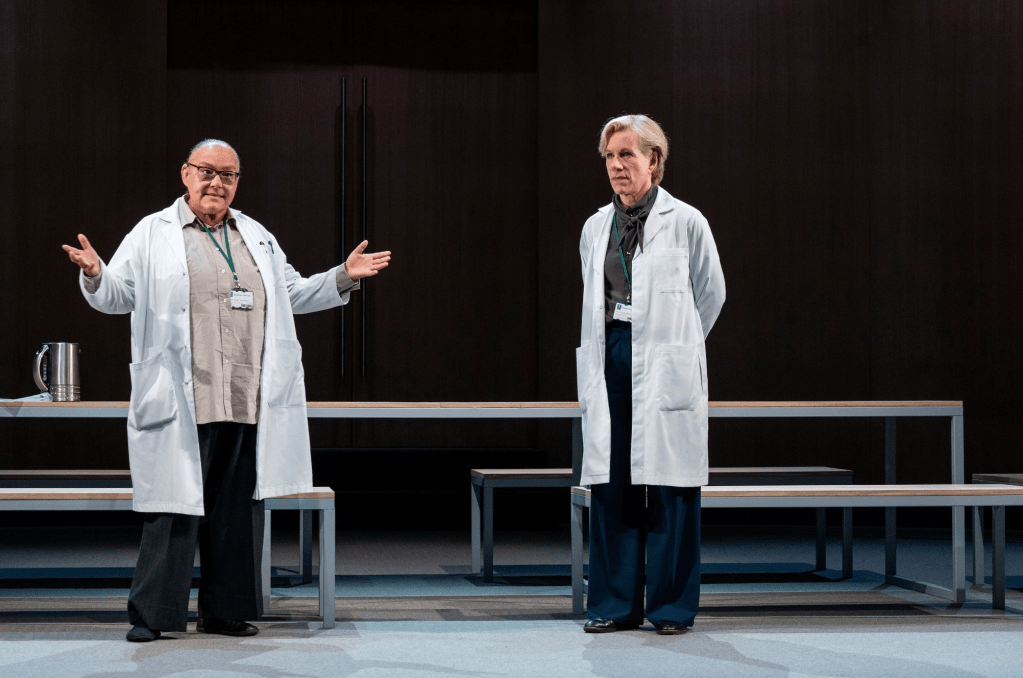
The brilliant Dee Nelson appeared as Ruth Woolf, replacing the enormously talented Juliet Stevenson, who fell ill, for the last performances at the Park Avenue Armory. The two-hour-and-forty-five-minute show keeps Nelson onstage for almost its entire length, even during the intermission. The eponymous hero is a secular Jew who runs a prestigious institute for nervous disorders. In the first act, she refuses to allow a Catholic priest to minister to an ailing 14-year-old girl patient, whom she admitted in exceptional circumstances and who is dying of sepsis from a self-administered abortion. Her reasons are strictly medical: she would prefer that the girl die in a drugged euphoria from a dose of camphor she gave her and unaware of her imminent death. But, when the patient dies without receiving the last rites, the incident begins a turbulent and soon to be public confrontation. It goes viral on social media, provokes petitions and TV debates, and jeopardizes not only Ruth’s future but that of the institute itself and a new government-financed building. Ruth becomes the victim of a political witch-hunt. She is accused of “religious agitation”, arraigned in court, and driven out of her own hospital by its anti-Jewish faction.
At the heart of the play lie two crucial issues handled with exemplary fairness. One is whether medical ethics on its own supersedes all other considerations. The other, related, topic is the danger of constantly playing identity politics: as one of Ruth’s colleagues points out, it is irrelevant whether a doctor is white or black, godless or a believer, a woman or a man, and even more destructive to allow the professions to be judged by sanctimonious trolls.
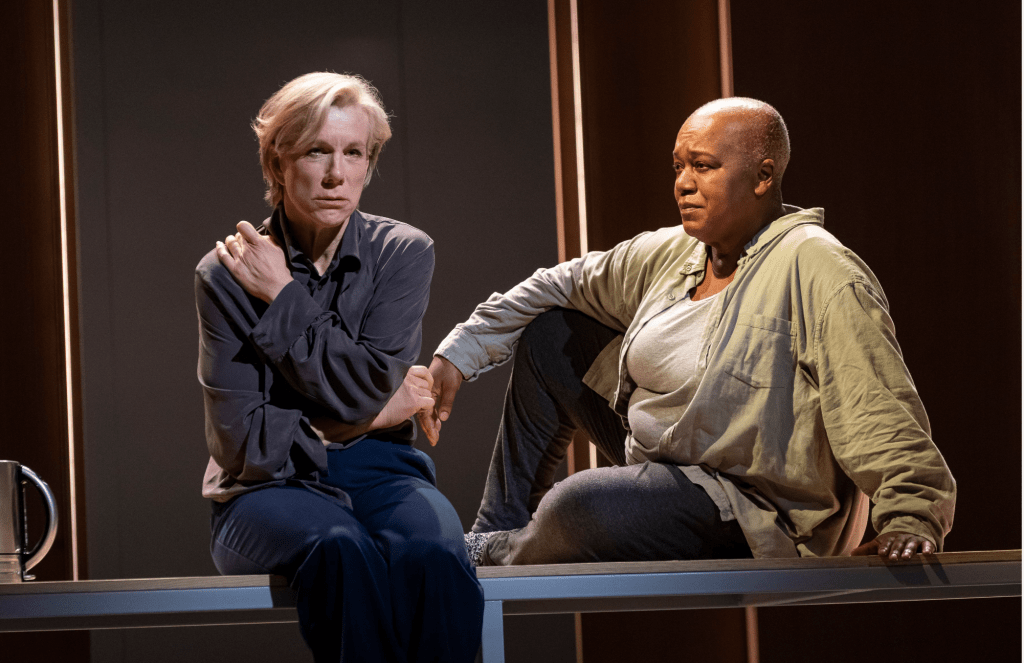
All of this is debated with unflinching clarity. Icke, following Schnitzler, shows his protagonist as a victim without totally exculpating her. Nelson hits the right note as Ruth by conveying both the doctor’s fundamental decency and her naive belief in the unassailability of truth. She shows Ruth to be politically naïve as well as brusque and intolerant of other people’s failings, especially in her vehemently expressed punctiliousness in criticizing misuses of language. But while Nelson shows how integrity can turn into inflexibility, she also beautifully portrays the human cost of making medicine one’s god. When seen close up during a hostile TV interview as she confronts the sacrifice of her relations with her betrayed homosexual lover Charlie (Juliet Garricks) and the transgender teenager Sami (Matilda Tucker) – who is struggling with gender identity and whom she mentors – her features memorably convey the pain of an unbearable sense of loss. Nelson’s consummate performance shows Ruth in all her complexity.
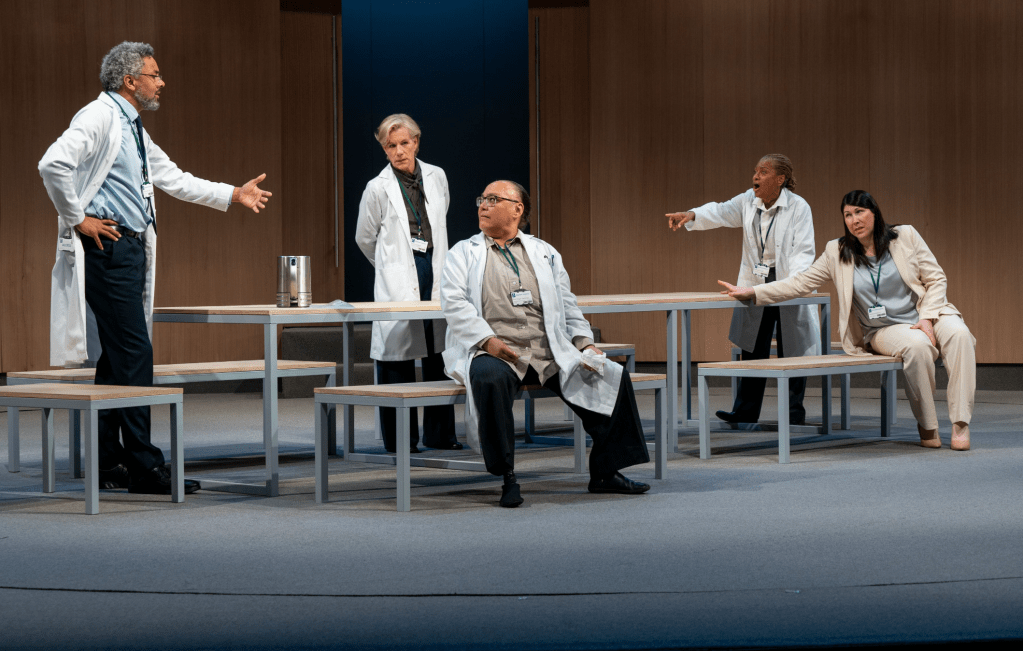
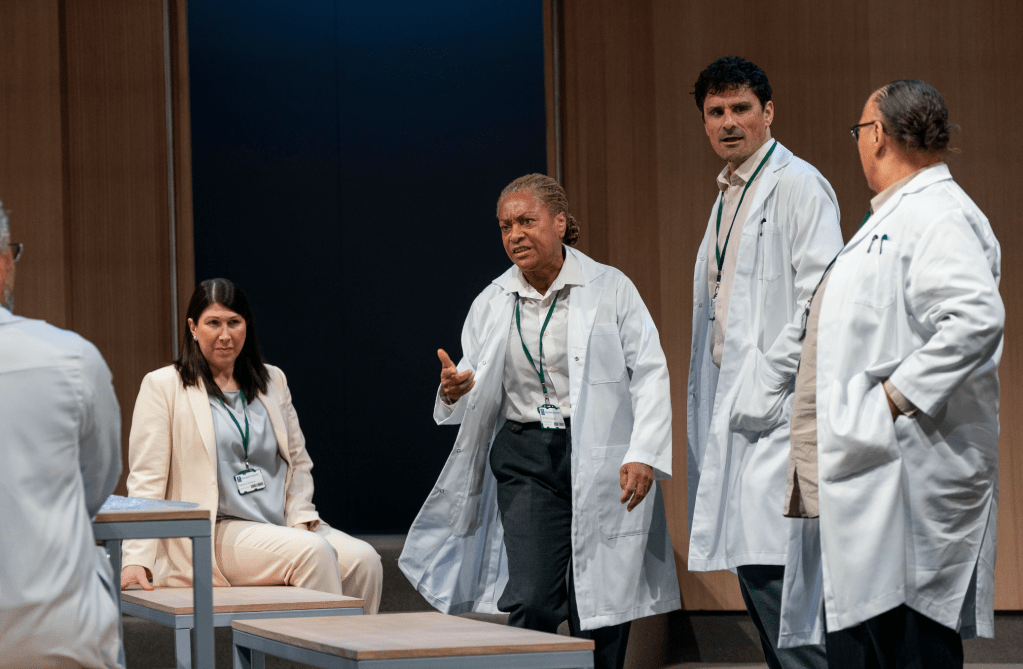
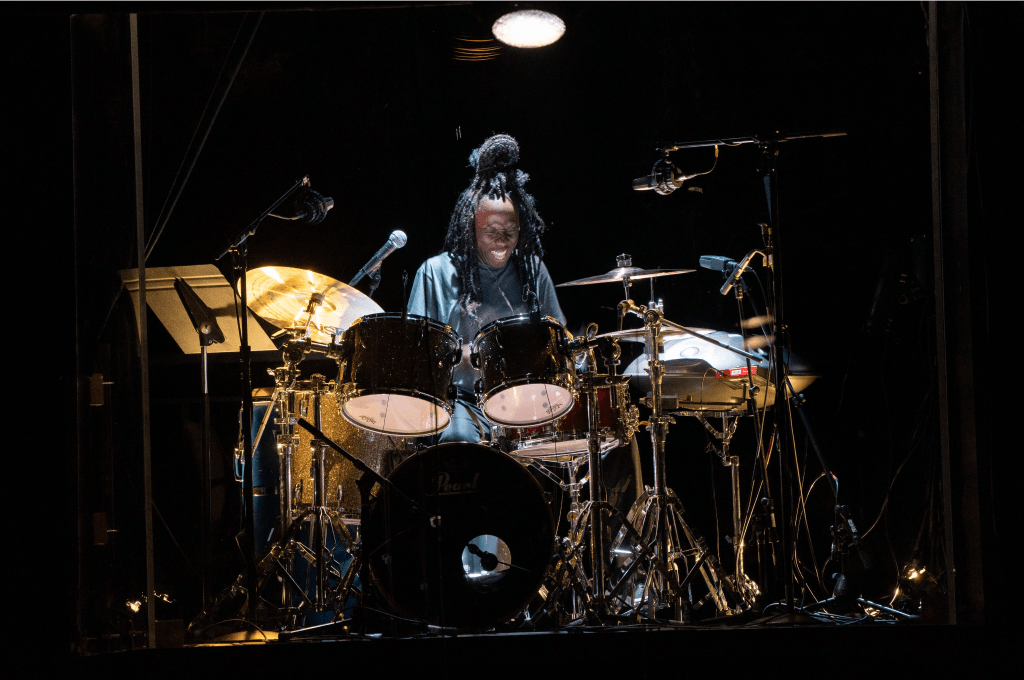
This production is impactful from the minimalist simplicity of Hildegard Bechtler’s gray-carpeted turntable stage design to the placing of the star drummer (Hannah Ledwidge) in a window high above the stage. Icke’s creative dissonance leads him to cast women in male roles and to have black actors play white characters (and vice versa), and they all inhabit their roles perfectly. Ruth is a white woman, and Dee Nelson is, too, but the other roles seem to be cast counter-gender: the executive committee includes two women playing men; and counter-race: Naomi Wirthner, a black woman plays Roger Hardiman the institute’s cofounder, as a vehemently anti-Jewish doctor and Ruth implacable opponent, Doña Croll the urbane civil servant is Brian Cyprian. John Mackay is the impassioned, spurned priest, a tall white man who is revealed to be black. They all perform with great skill. (The text notes that, apart from the TV scene, “each actor’s identity should be directly dissonant with their character’s.”)
What makes the play so satisfying is that Icke exposes the poisonous nature of our contemporary societal ills, including racism, without exculpating or sanctifying his hero. You sense the nasty factionalism throughout the play. He charts Ruth’s downfall as she tries to hold the board together in the face of a witches’ brew of identity politics, religion, science, virtue signaling and social media. She becomes the centerpiece of a virulent debate between faith and science. In a tense scene, she and her opponent, the priest – in an outstanding performance by John Mackay – seek to defend their religious and philosophical convictions. Ruth’s crime, as she tells the priest, is that “I don’t care about politics.” Ickes’s point is that political innocence is no defense in a society as divided as our own suggesting that the doctor and the priest, while dramatic antagonists, have more in common than they realize.
This theatre adaptation not only brims with energy but reminds us of Icke’s ability to turn social observation into prophetic insight. It also offers a complex reflection on our contemporary public life and stands in ironic relation to the conventions of tendentious drama. Philosophical arguments abound (think Shaw at his most pontificating) as do the practical issues that affect our lives today.
Performances run June 3 – August 19, 2023
Park Avenue Armory
Wade Thompson Drill Hall
CAST
Dee Nelson: Ruth Wolff
Juliet Garricks: Charlie
Daniel Rubin: Murphy
Naomi Wirthner: Hardiman
Christopher Osikanlu Colquhoun: Copley
John Mackay: Father
Doña Croll: Cyprian
Matilda Tucker: Sami
Mariah Louca: Roberts
Preeya Kalidas: Flint
Matilda Tucker: Sami
Hannah Ledwidge Drummer and Additional Sound Compositions
The Doctor, Park Avenue Armory, 2023
Photo credit: Stephanie Berger
Photography: Park Avenue Armory
The Doctor, Park Avenue Armory, 2023
Photo credit: Stephanie Berger
Photography: Park Avenue Armory

